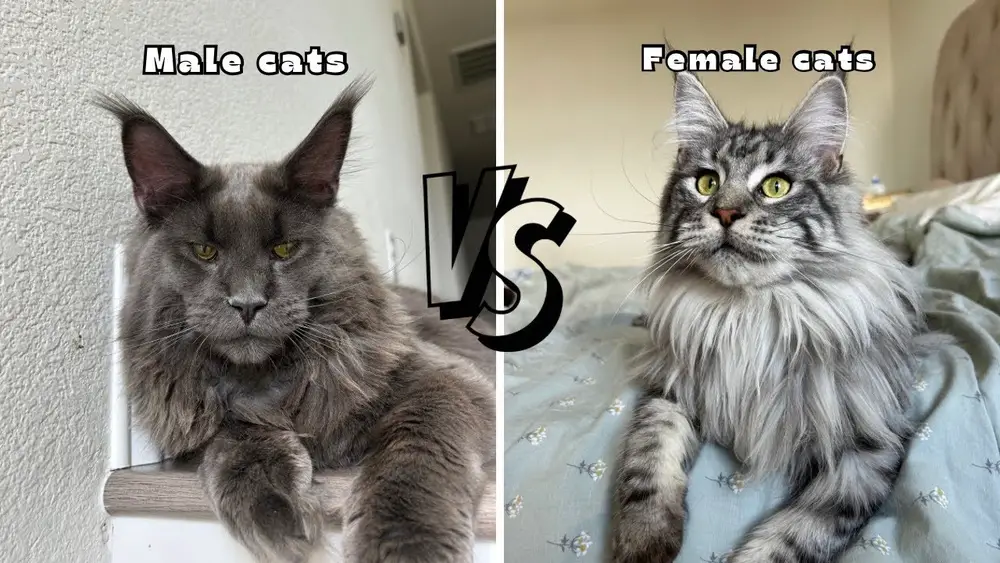
The Maine Coon is a legendary breed in the cat world. Known for their impressive size, fluffy tails, and gentle nature, Maine Coons attract cat lovers everywhere. But when choosing a Maine Coon, many people wonder: should you pick a male or female? While both genders share the breed’s classic traits, there are important differences in size, personality, affection, health, and even cost. Understanding these differences will help you make the best choice for your home and lifestyle.
Size Difference: Male Vs Female Maine Coon
Size is the most obvious difference. Maine Coons are among the largest domestic cats, but males stand out. Adult male Maine Coons usually weigh 12–18 pounds, sometimes reaching 20 pounds or more. Their bodies are muscular, with broad chests and heavy bones. They often grow longer and taller than females, with bushier tails and larger heads.
Adult female Maine Coons are noticeably smaller. Most females weigh 8–12 pounds. Their bodies are still strong, but they tend to be more slender and graceful. Female Maine Coons have finer facial features and their tails, while fluffy, are often slimmer.
Here’s a quick size comparison:
| Gender | Average Weight | Body Features |
|---|---|---|
| Male | 12–18 lb | Large, muscular, broad head |
| Female | 8–12 lb | Slim, graceful, finer face |
If you want a “giant” cat, a male Maine Coon is usually the best choice. However, females are still larger than most other breeds.
Personality Differences
Personality is where Maine Coons really shine. Both genders are friendly, playful, and social, but there are subtle differences.
Male Maine Coons are often described as goofy and playful. They love attention, enjoy games, and often act like “big kittens” throughout their lives. Many owners find males less shy and more willing to interact with strangers. Some call them “gentle giants” because they combine size with a sweet, easy-going nature.
Female Maine Coons are usually more independent and sometimes smarter. They can be cautious with new people and situations. Females often observe before joining in, showing patience and problem-solving skills. Many owners notice that females are better at learning tricks and adapting to changes.
Personality differences can also depend on whether the cat is spayed or neutered. Unneutered males might show more dominant or territorial behavior, while unspayed females might be moodier. After spaying or neutering, most Maine Coons become calmer, and their personalities settle.
| Trait | Male | Female |
|---|---|---|
| Playfulness | High | Moderate |
| Independence | Lower | Higher |
| Intelligence | Good | Very good |
| Social with strangers | Very social | More reserved |

Credit: www.youtube.com
Affection Level
Maine Coons are known for being affectionate, but the way they show love differs by gender.
Male Maine Coons tend to be more openly affectionate. They often follow their owners around, seek cuddles, and enjoy being held. Males can be “lap cats,” happy to snuggle for hours. Many owners report that their male Maine Coons are loyal, always wanting to be part of the family’s activities.
Female Maine Coons love their humans, but they show affection in quieter ways. Females may sit nearby, watch you, or rub against your leg. They are less likely to jump in your lap but still enjoy gentle petting and play. Their affection is often “earned” and feels special.
Some owners notice that affection levels increase after spaying or neutering. Both genders become more relaxed and loving when their hormones are balanced.
Territorial Behavior
Territorial behavior is common in all cats, but gender affects it in Maine Coons.
Male Maine Coons (especially unneutered) are more likely to mark their territory, patrol their space, and show dominance. They may be protective of their home and sometimes compete with other males. Neutering usually reduces these behaviors.
Female Maine Coons are less territorial. They can be protective, but their focus is more on routine and comfort. Females rarely mark territory, and they adjust faster to new pets or people.
If you have other cats or plan to add more in the future, females may integrate more smoothly. Males can be friendly, but sometimes need time to accept new arrivals.

Credit: www.reddit.com
Health Differences
Both male and female Maine Coons are generally healthy, but there are some differences and risks to consider.
Male Maine Coons are prone to urinary tract issues, especially if not neutered. They can develop blockages, which are dangerous and require urgent care. Keeping males at a healthy weight and providing proper hydration reduces the risk.
Female Maine Coons may develop reproductive-related issues if not spayed, such as uterine infections or certain cancers. Spaying reduces these risks and extends life expectancy.
Both genders are at risk for hypertrophic cardiomyopathy (heart disease), which is common in Maine Coons. Regular vet checks are important for early detection.
Here’s a health comparison:
| Risk | Male | Female |
|---|---|---|
| Urinary blockages | Higher | Lower |
| Reproductive issues | Low after neutering | Higher if unspayed |
| Heart disease | Equal risk | Equal risk |
| Longevity | 12–15 years | 12–15 years |
Cost Difference
The cost of owning a Maine Coon can be significant, but gender does play a small role.
Male Maine Coons are sometimes priced higher due to their size and popularity. Some breeders charge more for males, especially for show-quality cats. Larger males may eat more, so food expenses can be higher.
Female Maine Coons are often less expensive to buy. Their smaller size means lower food bills, and spaying is usually a one-time cost. Medical expenses can vary, but female Maine Coons are less likely to need emergency care for urinary issues.
Here’s what you can expect:
- Purchase price: $800–$2,000 (males can be $100–$300 more)
- Food: $40–$60/month (males may need more)
- Medical care: $200–$500/year (both genders)
- Spaying/neutering: $100–$300 (one-time)
- Unexpected costs: Always plan for emergencies
Remember, prices can vary depending on location and breeder quality.
Which Is Right For You? (quiz-style)
Choosing between a male and female Maine Coon is personal. Here’s a simple quiz to help you decide:
1. Do you want a big, playful cat?
- Yes: Male
- No: Female
2. Are you looking for a lap cat?
- Yes: Male
- No: Female
3. Do you prefer a smart, independent cat?
- Yes: Female
- No: Male
4. Will you have other cats or pets?
- Yes: Female
- No: Male (with careful introduction)
5. Are you worried about health risks like urinary blockages?
- Yes: Female
- No: Male (with good care)
6. Is price a big factor for you?
- Yes: Female
- No: Either
If you answered “Male” more often, you’ll likely enjoy a goofy, affectionate giant. If you chose “Female” more, an intelligent, independent companion is right for you.
Which Gender Is Easier?
Based on owner surveys and expert advice, female Maine Coons are often easier for first-time owners. They are less likely to show territorial behavior, need less space, and adapt well to changes. Females are also less prone to certain health issues and generally cost less. However, if you want a highly affectionate, playful cat and have experience with large breeds, a male can be very rewarding.
A non-obvious tip: Spaying or neutering your Maine Coon not only calms their personality but also reduces health risks. Many behavioral problems disappear after surgery.

Credit: www.reddit.com
Frequently Asked Questions
Are Maine Coon Males Really Much Bigger Than Females?
Yes, male Maine Coons are usually 30–50% heavier than females. While females are large compared to other breeds, males are true giants, often weighing over 16 pounds and measuring up to 40 inches from nose to tail.
Is There A Difference In Grooming Needs Between Male And Female Maine Coons?
Not really. Both genders have thick, long fur that needs regular brushing. However, larger males may have denser coats, requiring extra attention. Grooming helps prevent matting and keeps their skin healthy.
Do Male Maine Coons Get Along With Other Pets?
It depends on their personality and early socialization. Males are friendly but can be territorial, especially with other male cats. Proper introduction and neutering help. Females usually adjust more quickly to new pets.
Are Female Maine Coons Less Playful?
They are playful, but their style is different. Females prefer interactive toys and puzzles, showing their intelligence. Males tend to enjoy rough-and-tumble games and active play. Both genders need mental stimulation.
What’s The Average Lifespan For Maine Coons?
Both male and female Maine Coons live 12–15 years on average. Good diet, regular vet checks, and indoor living help them stay healthy. Some Maine Coons reach 16–18 years with excellent care.
Maine Coons are a joy, no matter the gender. Knowing the differences helps you make a smart choice and prepare for a happy life with your new feline friend. If you want more details on Maine Coon health and traits, visit Wikipedia for trusted breed information.
**As an Amazon Associate, I earn from qualifying purchases.**