The Pallas’s cat, or manul, is a small wild cat from the steppes of Central Asia. Known for its dense fur, flat face, and stocky build, this rare feline survives extreme cold at high altitudes. It belongs to the monotypic genus Otocolobus and remains strictly wild.
- Peter Simon Pallas first described the species in the late eighteenth century.
- The thick coat protects the animal against sub-zero winter temperatures.
- Steppe habitats face threats from livestock grazing and rodent control programs.
- Manuls are solitary, highly territorial animals that prove nearly impossible to keep as pets.
- Conservation efforts focus on protecting prey populations, particularly the pika, and expanding protected areas across Mongolia, China, and Central Asia.
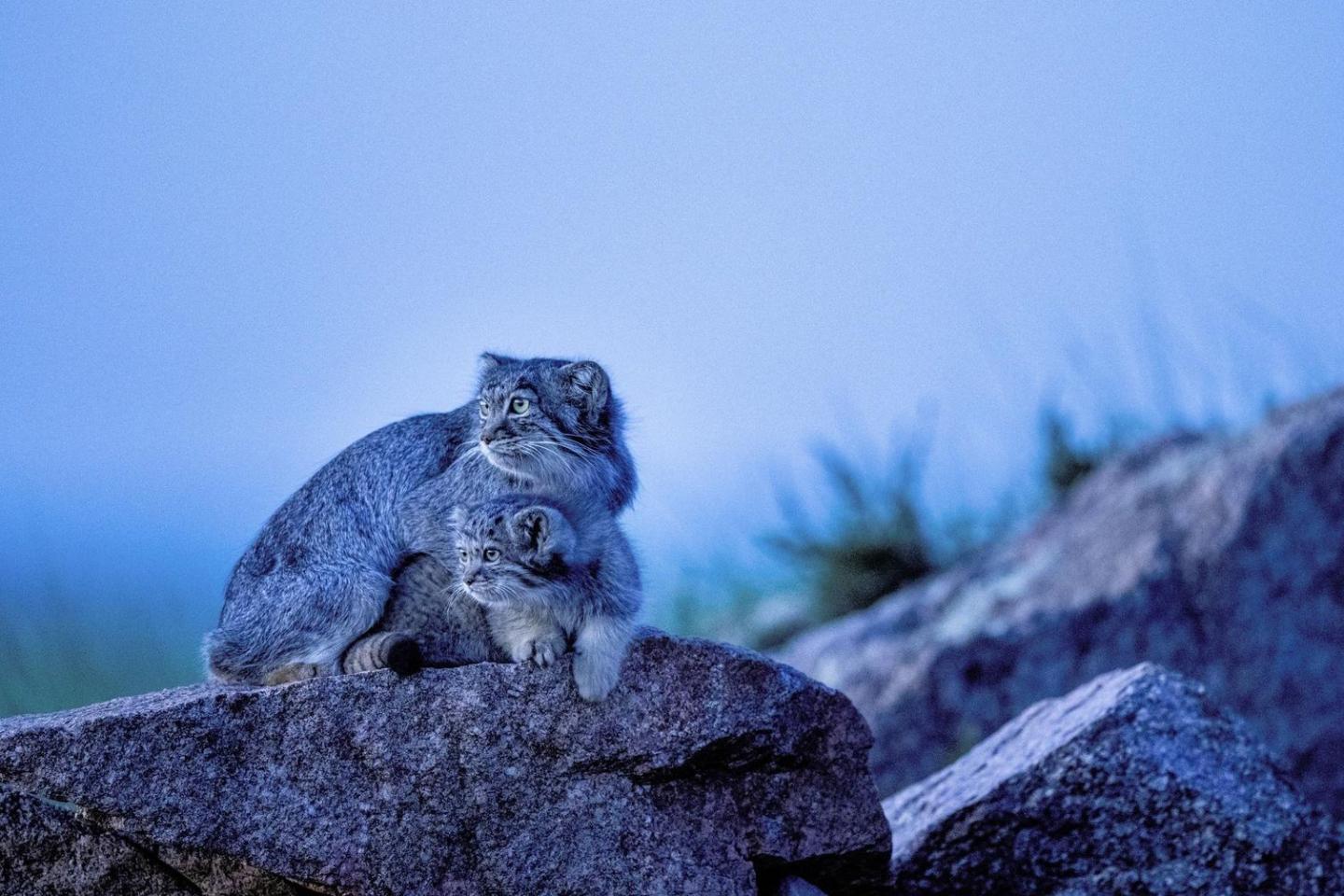
Few wild felines capture the imagination quite like the Pallas’s cat. Often referred to by its Mongolian name, the manul, this creature looks like a grumpy, extraordinarily fluffy household cat that somehow wandered into the high-altitude steppes of Central Asia. Yet beneath that comical exterior lies a remarkably tough survivor. Adapted to brutal winters, thin air, and barren landscapes, the manul represents an evolutionary path distinct from almost any other feline.
Studying or observing the Pallas’s cat requires an appreciation for remote environments. These cats live in places where few humans venture, making field research difficult and sightings exceptionally rare. This comprehensive guide examines every aspect of the manul, from its unique physical adaptations and evolutionary history to its behavior, habitat challenges, and conservation outlook.
Taxonomy and Etymology: Understanding *Otocolobus manul*
The Pallas’s cat holds a unique place in taxonomic classification. It is the sole member of the monotypic genus Otocolobus. German naturalist Peter Simon Pallas first formally described the species in 1776 during his extensive explorations of Russia and Central Asia. He initially named the cat Felis manul, linking it to the broader feline genus before scientists recognized its distinct anatomical differences.
The generic name Otocolobus derives from Greek roots meaning “ugly-eared” or “short-eared,” a reference to the cat’s characteristically low-set, rounded ears. The common name “manul” stems from the Mongolian language. Meanwhile, the English moniker honors Pallas for introducing the animal to Western science.
Genetic studies have clarified the manul’s position within the feline family tree. Phylogenetic research indicates that the Pallas’s cat belongs to the leopard cat lineage (the Prionailurus genus group), diverging from a common ancestor roughly 5.19 million years ago. Despite this genetic relationship, its closest relatives look and act quite differently, highlighting how adaptation to harsh high-altitude environments shaped the manul’s unique morphology.
Physical Characteristics and Adaptations
At first glance, a Pallas’s cat might appear hefty, perhaps even overweight. In reality, this impression comes from an extraordinary coat of fur rather than excess body fat. An adult manul typically weighs between 2.5 and 4.5 kilograms (5.5 to 10 pounds), roughly the size of a domestic house cat, though its stocky body and dense hair make it look much larger.
| Physical Trait | Description | Adaptive Function |
|---|---|---|
| Coat Density | Up to 9,000 hairs per square centimeter; longest fur of any cat. | Insulation against sub-zero winter temperatures in open steppes. |
| Facial Structure | Flattened profile with high-set eyes and low-set ears. | Allows the cat to peer over rocks and crests while remaining concealed. |
| Pupil Shape | Circular pupils when contracted. | Differs from vertical slit pupils of many other small cats; suited for bright steppe light. |
| Coat Coloration | Silver-gray to ochre with dark vertical bars and white-tipped guard hairs. | Camouflage against rocky slopes, scree fields, and winter snow. |
The fur deserves special attention. During the winter months, a manul grows the densest and longest coat of any feline species. The underfur is exceptionally thick to trap body heat, while the guard hairs feature white tips that create a frosted appearance, blending seamlessly into snowy or frost-covered landscapes.
Another striking feature is the cat’s facial anatomy. The eyes are set high on the skull, and the ears sit exceptionally low on the sides of the head. This arrangement is a masterclass in ambush hunting. When a manul stalks prey among rocks or peeks over the ridge of a hill, it exposes very little of its head, reducing the chance of detection by sharp-eyed raptors or alert rodents.

Geographic Distribution and Habitat
The range of the Pallas’s cat stretches across the heart of Asia, spanning several countries and distinct climatic zones. Populations exist in Mongolia, China, Russia, Kazakhstan, Kyrgyzstan, Tajikistan, Pakistan, and parts of Iran and Nepal. Within this vast area, the distribution is patchy, reflecting the cat’s specific habitat requirements.
Manuls are primarily inhabitants of cold, arid environments. They favor high-altitude steppes, semi-deserts, stony plateaus, and rocky mountainous terrain, often living at elevations ranging from 1,000 to over 5,000 meters above sea level. Unlike forest-dwelling cats, they require open spaces where they can scan for prey and locate suitable shelters.
A critical component of a manul’s home range is the availability of shelter. Because these cats do not dig their own burrows, they rely heavily on natural rock crevices, small caves, abandoned dens of marmots or foxes, and spaces beneath boulders. These refuges are essential not only for resting safely during the day but also for escaping fierce winter blizzards and rearing kittens.
Behavior and Social Structure
Pallas’s cats are solitary, elusive animals that maintain strict territorial boundaries. Most of their active periods occur during twilight (crepuscular) and nighttime hours, though high-altitude populations in remote areas may also hunt during the day, particularly when feeding growing litters.
Territory size varies depending on food availability and terrain ruggedness. In resource-poor steppes, a single cat may roam across dozens of square kilometers, marking its boundaries with scent secretions, urine spraying, and scratch marks on prominent rocks. Encounters between adults outside the breeding season are generally avoided through acoustic and olfactory signals.
Communication methods include low-pitched growls, harsh barks, and sharp purrs. When alarmed, a manul often freezes rather than flees, relying on its camouflage. If discovered up close, it may hiss or spit to intimidate potential predators, such as wolves, red foxes, and large eagles.
Diet and Hunting Ecology
The dietary preferences of the Pallas’s cat reflect its austere environment. The single most important prey item across much of its range is the pika—a small, potato-shaped lagomorph that shares rocky steppe habitats. Alongside pikas, manuls hunt voles, gerbils, young marmots, small birds, and occasionally insects.
Hunting style relies on patience rather than high-speed pursuit. A manul is not built for running down prey over long distances; its short legs and stocky build mean it lacks endurance. Instead, it employs a stalk-and-ambush technique. The cat moves stealthily through boulder fields or tall grass, using every scrap of cover before launching a swift, short charge or pouncing directly onto an unsuspecting rodent.
Because prey availability fluctuates dramatically with seasonal weather patterns, manuls must adjust their foraging efforts. During severe winters when snow covers the ground, hunting becomes hazardous and energy-intensive, testing the physical limits of the species.
Reproduction and Life Cycle
The breeding season for the Pallas’s cat is brief, typically occurring between February and March. During this window, males and females seek each other out through vocalizations and scent marking. Gestation lasts roughly 66 to 75 days, with litters born in April or May.
A typical litter consists of two to six kittens, though numbers can vary. The mother rears the young in a well-hidden den, such as a deep rock crevice or an abandoned burrow lined with dry grass and fur. Newborn kittens are blind and helpless, weighing only a few hundred grams.
Kitten development proceeds rapidly during the summer months:
- Weeks 1–2: Eyes open, and the kittens begin exploring the immediate interior of the den.
- Months 2–3: Young manuls venture outside the den for the first time, learning to play, stalk stationary objects, and consume solid meat provided by the mother.
- Month 4: Kittens begin accompanying the mother on hunting excursions, picking up essential survival techniques.
- Months 5–6: Independence arrives as juveniles disperse from the birth territory to establish their own ranges.
Sexual maturity is reached at around one year of age. In the wild, the lifespan of a Pallas’s cat typically ranges from two to six years, though individuals in professional zoological care may live up to twelve years.
Conservation Status and Major Threats
The International Union for Conservation of Nature (IUCN) currently classifies the Pallas’s cat as Least Concern, though experts acknowledge that this status masks significant regional declines and severe data deficiencies. Reliable population estimates remain difficult to obtain due to the cat’s remote habitat and elusive habits.
Several persistent threats jeopardize wild populations across Central Asia:
- Habitat Degradation and Loss: Overgrazing by domestic livestock (sheep, goats, and cattle) damages steppe vegetation, reducing the plant cover and food sources needed by pikas and other small rodents.
- Rodent Control Programs: Poisoning campaigns targeting pikas and voles—viewed by some agriculturalists as pests—reduce the manul’s primary food source and can cause secondary poisoning when cats consume tainted prey.
- Mining and Infrastructure: Expanding mining operations, road networks, and fencing in Central Asia fragment continuous wildlife corridors, isolating local manul populations.
- Hunting and Poaching: Although legally protected across most of its range, the manul is occasionally hunted for its dense fur or killed by shepherd dogs protecting livestock.
The Captive Experience: Why Manuls Do Not Make Pets
Internet memes frequently portray the Pallas’s cat as a cuddly, grumpy house pet. This online perception has sparked dangerous misconceptions. Keeping a manul as a companion animal is impossible for several practical and ethical reasons.
First and foremost, the Pallas’s cat is a wild animal with zero history of domestic selection. It retains fierce defensive instincts, sharp teeth, and claws designed for predation. Attempts to confine a manul within a domestic household typically result in severe property damage, extreme stress for the animal, and serious injury to human handlers.
Furthermore, manuls possess highly specialized immune systems. In natural, dry, cold steppe environments, they are largely shielded from many common feline pathogens found in lower-altitude, humid regions. When introduced to standard captive environments with high humidity or exposure to domestic cat diseases (such as toxoplasmosis or feline panleukopenia), manuls suffer catastrophic mortality rates. Modern zoos and conservation centers must maintain rigorous quarantine protocols, specialized climate-controlled enclosures, and precise diets to keep captive individuals healthy.
Research and Field Conservation Initiatives
Protecting the Pallas’s cat requires collaborative international efforts. Organizations such as the Pallas’s Cat International Conservation Alliance (PICA) work alongside local researchers, governments, and NGOs to study the species in the wild and mitigate human-wildlife conflicts.
Field research relies heavily on non-invasive techniques. Conservationists deploy motion-activated camera traps across remote rocky outcrops in Mongolia and the Tibetan Plateau to monitor population density, track movement corridors, and assess local prey abundance. Genetic sampling from scat collected in the field also helps researchers understand genetic diversity and population connectivity.
Community outreach plays an equally vital role. In regions where herders share grazing lands with manuls, conservation programs educate local communities about the ecological value of the cats and advocate for livestock management practices that minimize conflict and protect natural habitats.
Frequently Asked Questions
Why does the Pallas’s cat look so angry or grumpy?
The manul’s permanent grumpy expression is a result of its unique skull anatomy. Its eyes are set high on the head, and its ears are positioned low and flat on the sides, creating a flattened facial profile that human observers naturally interpret as a scowl or frown.
Can you keep a Pallas’s cat as a pet?
No. The Pallas’s cat is a wild animal that cannot be domesticated. It has specialized dietary and environmental needs, a highly aggressive defense mechanism when cornered, and a fragile immune system that makes captive domestic environments lethal.
How cold can a Pallas’s cat tolerate?
Manuls live in environments where winter temperatures regularly plunge below -40°C (-40°F). Their exceptionally dense fur coat, featuring up to 9,000 hairs per square centimeter, provides superior insulation against these extreme conditions.
What do Pallas’s cats eat?
Their primary diet consists of pikas, along with small rodents such as voles, gerbils, and marmots, supplemented occasionally by small birds and insects.
Where is the best place to see a Pallas’s cat in the wild?
Spotting a manul in the wild is exceptionally rare due to their camouflage, solitary nature, and remote steppe habitats. The steppes and rocky outcroppings of Mongolia and parts of the Tibetan Plateau offer the highest probability of occurrence, though sightings remain infrequent even for experienced wildlife biologists.
**As an Amazon Associate, I earn from qualifying purchases.**