Why vaccinations are the single most important health decision for your kitten
Bringing a kitten home is exciting, but it also comes with big responsibilities. One of the most crucial choices you will make is when to vaccinate your kitten. Vaccines protect your pet from serious diseases that can spread quickly and sometimes become fatal. Many illnesses are invisible at first, but can weaken your kitten’s immune system or cause lifelong problems. By following the right kitten vaccine schedule, you give your pet the best chance for a healthy, active life. Vaccinations are not just for your kitten’s safety—they also help protect other cats, and even humans, from certain diseases. As a calm expert, I’ll guide you through every step, making sure you understand why and when each shot matters.
Core Vs Non-core Kitten Vaccines
Veterinarians divide kitten vaccines into two main groups: core and non-core. Understanding this difference helps you make informed decisions for your kitten.
Core kitten vaccines are considered essential for all kittens, no matter where you live or how your kitten spends time. These vaccines protect against diseases that are widespread, deadly, or can affect humans. The most important core vaccines are:
- FVRCP vaccine: Protects against three major diseases—feline viral rhinotracheitis, calicivirus, and panleukopenia.
- Rabies vaccine: Required by law in many places; rabies can spread to humans and is almost always fatal.
Non-core vaccines are recommended based on your kitten’s lifestyle, risk, and local disease patterns. Not every kitten needs them, but some do. The most common non-core vaccine for kittens is:
- Feline leukemia (FeLV) vaccine: Recommended for kittens that may meet other cats or spend time outdoors.
Some non-obvious insights: Indoor kittens may still need non-core vaccines if they might ever escape or interact with other cats. Also, kittens adopted from shelters or rescues often need more careful vaccination plans, as their exposure risk is higher.
Kitten Vaccination Schedule Table (6 Weeks To 1 Year)
The kitten shots schedule is designed to build strong immunity, starting from a young age. Kittens need several boosters, spaced out over their first few months. Missing a booster can leave your kitten unprotected. Here’s a clear table showing the typical schedule:
| Kitten Age | Vaccine(s) | Notes |
|---|---|---|
| 6 weeks | FVRCP (1st dose) | Start core protection |
| 8 weeks | FVRCP (2nd dose), FeLV (1st dose) | Booster and start FeLV if needed |
| 12 weeks | FVRCP (3rd dose), FeLV (2nd dose), Rabies (single dose) | Rabies required by law in many areas |
| 16 weeks | FVRCP (final dose), FeLV (final dose) | Finish core and FeLV series |
| 1 year | FVRCP (booster), Rabies (booster), FeLV (booster) | Annual protection begins |
Practical tip: Always bring your kitten’s vaccination records to every vet visit. If you miss a booster, ask your vet how to catch up safely.
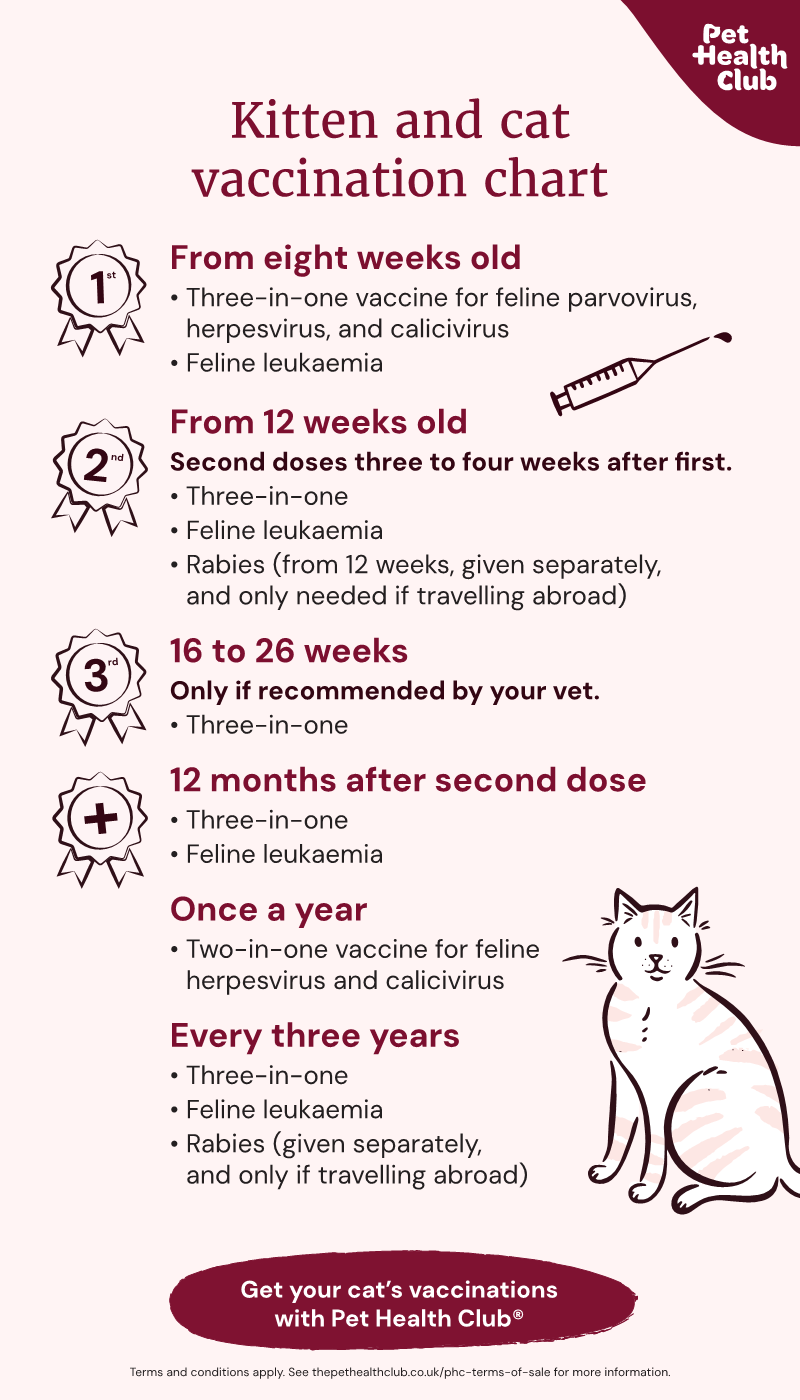
Credit: www.pethealthclub.com
Fvrcp Vaccine — What It Protects Against
The FVRCP vaccine is the foundation of kitten health. It covers three dangerous diseases:
- Feline viral rhinotracheitis (FVR): Caused by feline herpesvirus, this affects the respiratory system. Symptoms include sneezing, eye discharge, and difficulty breathing. It spreads easily between cats.
- Calicivirus: Triggers mouth ulcers, fever, and joint pain. Some strains cause severe illness and can lead to pneumonia.
- Panleukopenia (feline distemper): One of the most deadly cat diseases. It attacks the digestive and immune systems, causing vomiting, diarrhea, and rapid dehydration.
The FVRCP schedule kitten follows multiple doses, starting as early as six weeks. Each booster strengthens immunity, as kittens’ bodies are still learning to fight infections. Even indoor-only kittens need this vaccine, since viruses can travel on shoes, clothes, or hands.
Non-obvious insight: FVRCP vaccines can sometimes protect against newer strains of viruses, but not always. If you live in an area with outbreaks, discuss extra protection with your vet.
Feline Leukemia (felv) Vaccine
The feline leukemia vaccine is often misunderstood. FeLV is a virus that weakens a cat’s immune system, making them vulnerable to infections, anemia, and cancer. It’s spread through saliva, close contact, and sharing bowls or litter boxes.
Kittens are especially at risk because their immune systems are not fully developed. The kitten vaccine schedule recommends FeLV shots for:
- Kittens living with FeLV-positive cats
- Kittens allowed outdoors, even briefly
- Kittens in shelters or multi-cat homes
FeLV shots are given as a series, usually at 8, 12, and 16 weeks, then yearly if risk remains. If your kitten stays indoors and never meets other cats, you might skip FeLV. But many owners regret not vaccinating if their kitten escapes or if new cats join the home.
Practical tip: Test your kitten for FeLV before starting the vaccine series. Vaccines work best if the kitten is negative for the virus.
Rabies Vaccine For Kittens
The rabies vaccine kitten is required by law in many places. Rabies is a deadly virus that attacks the nervous system. It can infect all mammals, including humans. Even indoor kittens can get rabies if a bat or rodent enters your home.
Rabies shots are given once, usually at 12 weeks, with a booster at one year. After that, adult cats get vaccinated every one to three years, depending on local laws and the vaccine used.
Here’s a quick comparison of rabies vaccine timing and requirements:
| Kitten Age | Rabies Vaccine | Legal Requirement |
|---|---|---|
| 12 weeks | First dose | Required in most states |
| 1 year | Booster | Maintains legal compliance |
| Adult (3 years+) | Booster every 1–3 years | Check local laws |
Non-obvious insight: Some states require rabies vaccination for all cats, regardless of indoor status. Check your local regulations to avoid fines.
What To Expect After Each Kitten Vaccination
After your kitten gets a shot, you may notice some changes. Most kittens recover quickly and show no major problems. Still, knowing what’s normal can help you avoid worry.
- Mild tiredness: Many kittens nap more after a vaccine. This is normal and usually lasts a few hours.
- Slight swelling at injection site: The area may feel a little sore, but swelling should fade in 24–48 hours.
- Low fever: Some kittens develop a mild fever. Monitor their temperature and behavior.
- Decreased appetite: It’s common for kittens to eat less right after shots.
Your kitten should return to normal within a day. If symptoms last longer or seem severe, contact your vet.
Practical tip: Schedule vaccinations when you can monitor your kitten for a day. Avoid busy or stressful days.

Credit: www.thesprucepets.com
Vaccination Side Effects — What Is Normal
Most kittens experience only mild effects after shots. Here’s a table comparing normal and concerning side effects:
| Normal Side Effects | When to Call the Vet |
|---|---|
| Sleepiness | Extreme lethargy |
| Swelling at site | Large lump, lasting more than 3 days |
| Mild fever | High fever, over 104°F |
| Reduced appetite (24 hours) | No eating/drinking for more than 24 hours |
| Minor discomfort | Persistent pain or limping |
| Small skin reaction | Severe rash or hives |
Rarely, kittens can have allergic reactions. Signs include vomiting, diarrhea, difficulty breathing, or collapse. These need urgent vet attention.
Practical tip: Write down any reactions after each shot. This helps your vet adjust future vaccines if needed.
How Much Do Kitten Vaccines Cost?
Vaccine prices vary based on your location, clinic, and the number of shots needed. On average, the initial series for kittens costs between $20 and $50 per vaccine. The full vaccine schedule, including FVRCP, FeLV, and rabies, can range from $100 to $200 for the first year.
Here’s a breakdown:
- FVRCP vaccine: $20–$40 per dose
- FeLV vaccine: $25–$35 per dose
- Rabies vaccine: $20–$30 per dose
Additional costs may include exam fees, testing, and booster shots. Some clinics offer package deals for kittens. Shelters often provide vaccines at lower prices or as part of adoption.
Common mistake: Skipping vaccines to save money can cost more in the long run. Treating preventable diseases is expensive and risky.
For more details on pricing and recommendations, visit the ASPCA vaccine guide.

Credit: www.petmd.com
Frequently Asked Questions
What Happens If My Kitten Misses A Booster Shot?
Missing a booster can weaken your kitten’s immunity. Contact your vet—they may restart the series or adjust the schedule. Never try to guess; professional guidance is important.
Do Indoor Kittens Need All The Same Vaccines?
Yes, indoor kittens still need core kitten vaccines. Viruses can travel on shoes, clothes, and hands. Some non-core vaccines may not be needed, but discuss risks with your vet.
How Soon After Adoption Should I Start Vaccinations?
Start as soon as possible, usually at 6–8 weeks. If your kitten is older, your vet will recommend a catch-up plan. Kittens from shelters may already have some shots, so check records.
Are Kitten Vaccines Safe?
Yes, vaccines are very safe. Most kittens have mild, short-lasting side effects. Severe reactions are rare, and the benefit far outweighs the risk.
Can My Kitten Get Sick From The Vaccine Itself?
Vaccines do not cause the diseases they protect against. Some mild symptoms, like fever or tiredness, are normal, but your kitten will not get the actual illness.
Your kitten’s health starts with strong protection. Following the correct kitten vaccination schedule gives your pet a safe, happy start and prevents heartbreak later. Always work with your vet, keep records, and stay informed. Vaccines are a simple step that makes a lifetime of difference.
**As an Amazon Associate, I earn from qualifying purchases.**