No, you cannot keep a Pallas cat as a pet. They are wild animals that belong to Central Asia. They suffer in home environments, catch fatal diseases easily, and break strict exotic animal laws everywhere.
- Pallas cats possess fierce wild instincts that defy taming.
- Their fragile immune systems collapse in standard captive lowland environments.
- Private ownership violates wildlife laws and conservation treaties.
- They look fluffy, but their true nature is fiercely solitary.

Can You Keep a Pallas Cat as a Pet?
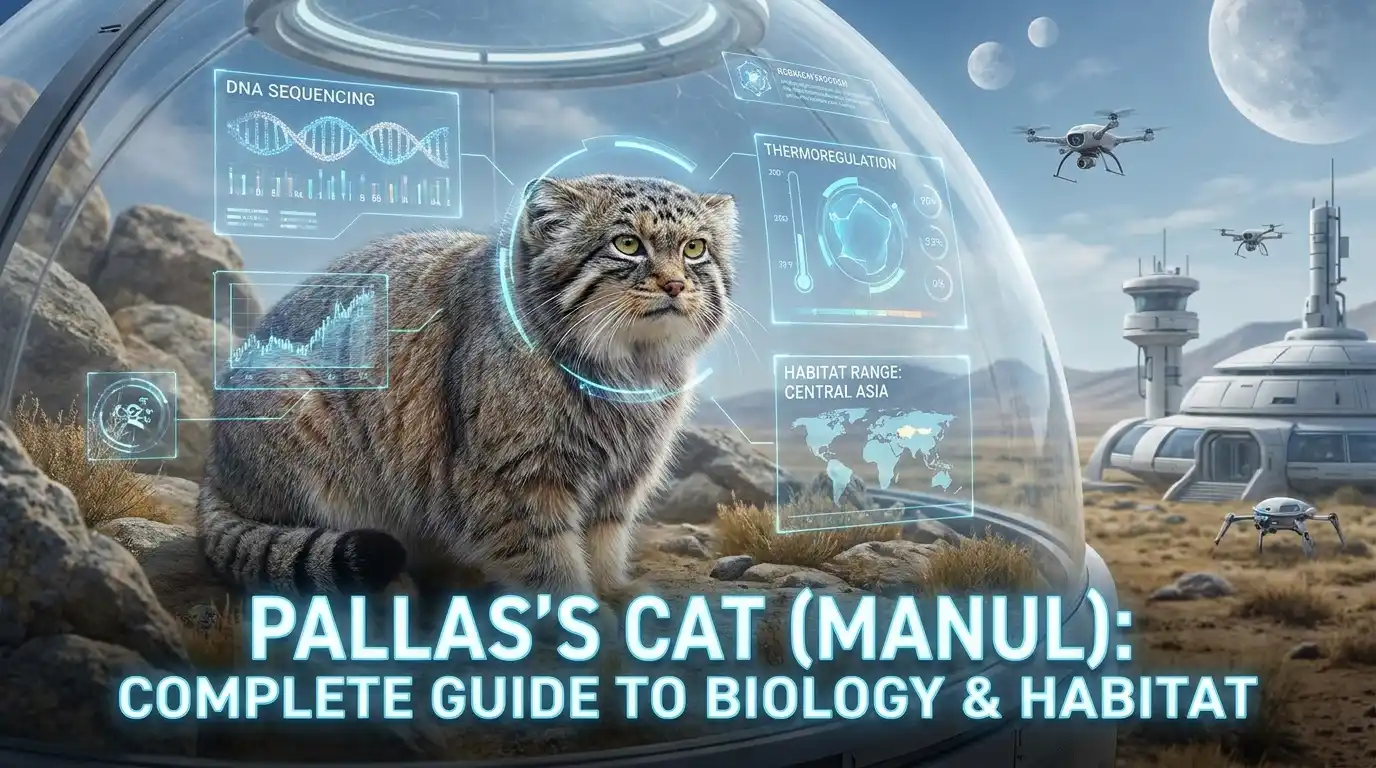
You might see viral videos of these grumpy felines and wonder about pet ownership. The reality stands firm: you cannot house a manul at home. These creatures prowl the high steppes and rocky deserts of Central Asia. They evolved for harsh, dry mountains. Human houses, commercial pet food, and indoor life cause rapid illness and death for them.
People often confuse fluffy fur with a cuddly personality. A domestic cat descends from African wildcats that adapted to human villages. The Pallas’s cat (Otocolobus manul) never underwent that path. They remain pure wild predators. Handling them sparks intense defensive aggression. Their sharp teeth and claws protect strict personal boundaries.
To understand why keeping one of these animals is completely out of the question, it helps to look at what daily life would actually entail in a household setting. Imagine trying to provide care for a creature whose ancestors survived wind-blasted mountain passes at elevations over 15,000 feet. Bringing that animal into a suburban living room is not just impractical; it is a recipe for immediate behavioral breakdown and severe veterinary emergencies.
The short answer: Why manuls stay wild
Nature forged these animals for extreme cold and high altitude. Their dense coats and low-slung bodies help them survive mountain winds. Captivity strips away their natural advantages. Private owners lack the specialized knowledge required to keep them alive. Every attempt to domesticate them ends in disaster for the animal.
In the wild, a manul maintains a massive home range. They patrol vast, rocky territories, hunting for pikas, voles, and insects. In a house or a backyard enclosure, this biological drive to roam turns into pacing and high anxiety. They cannot understand boundaries, fences, or human schedules. Their survival instincts remain triggered twenty-four hours a day, keeping them in a constant state of hyper-vigilance.
The danger of confusing fluffy appearance with cuddliness
Thick winter fur makes them look round and soft. Do not let looks fool you. They are ferocious hunters of pikas and rodents. Their claws slice skin with ease. They hiss, spit, and attack when strangers approach. They reject affection entirely.
A common mistake people make is assuming that because a wildcat looks small (roughly the size of a large domestic house cat, weighing between 5 and 10 pounds), it can be handled like one. In reality, their physical build is exceptionally stocky, packed with dense muscle and heavy bone structure designed for wrestling prey in burrows. Trying to pet or cuddle a manul will invariably result in deep puncture wounds and shredded clothing.
Why Are Pallas Cats Impossible to Domesticate?
Domestication takes thousands of years of selective breeding. Farmers bred house cats for gentle traits and social bonds. Otocolobus manul bypassed this entire history. Their wild instincts stay sharp. They view humans as threats or rivals rather than companions.
Past keepers learned harsh lessons. Wild felines refuse to use litter boxes reliably. They spray pungent marking scents across living spaces. Confined rooms trigger severe stress behaviors. Stressed cats stop eating and waste away.
Consider the daily routine of a wild predator. They do not cuddle on the couch or sleep at the foot of a bed. When kept in confinement, they often resort to destructive behaviors, chewing on electrical cords, scratching through drywall, and attacking anyone who enters their space. Their wild psychology simply cannot adapt to domestic comforts.
Genetics and thousands of years of wild evolution
Wild DNA dictates every action. Their brains produce stress hormones suited for open steppes. Four walls trap their nervous energy. Generations in the wild create an animal unsuited for human sofas.
Their sensory organs are tuned to detect distant rustles in dry grass and the movements of underground rodents. The hum of household appliances, televisions, and human voices creates a sensory overload that keeps their nervous systems fried. This chronic stress compromises their organs and shortens their lifespans drastically.
Behavioral traits when handled by humans
Handlers face constant danger. These felines bite hard and fast. They hate touch. They hide under furniture and lunge at moving feet. Their wild nature resists training completely.
When cornered, a domestic cat might hiss or run away. A Pallas cat stands its ground, flattens its ears, snarls, and launches a furious counterattack. They do not respond to positive reinforcement, treats, or clicker training methods used for domestic pets. Their behavior remains entirely unpredictable.

What Does the Law Say About Owning a Pallas Cat?
Governments protect this species with heavy regulations. The Convention on International Trade in Endangered Species (CITES) lists them under strict international protection. Smuggling them across borders breaks federal law. Police and wildlife agents confiscate illegal pets immediately.
State and local laws ban exotic felines across the United States. Cities and counties enforce total bans on wild predators. Permits go only to accredited research centers and professional zoos. Private citizens face heavy fines and prison time for possession.
Law enforcement agencies do not look the other way when it comes to exotic cats. Wildlife trafficking investigations often lead straight to the seizure of the animal and criminal charges for the owner. Even if someone manages to acquire a manul through illegal channels, the risk of discovery by neighbors, animal control, or disgruntled acquaintances is extremely high.
US federal and state legislation overview
Federal acts control the movement of exotic fauna. State laws add extra bans. Most states prohibit any feline species outside standard house cats. Local animal control officers seize illegal wildlife on sight.
For example, the Lacey Act prohibits the trade of illegally acquired wildlife across state lines. Many states have enacted total bans on owning any member of the Felidae family other than the domestic cat. Violating these statutes carries steep financial penalties and potential felony charges.
Permits, licensing, and accredited facility requirements
Zoos must meet high standards to house manuls. Inspectors check enclosure safety, climate control, and veterinary care. Private homes fail every basic facility check. Licensing boards reject non-commercial applications instantly.
Acquiring a permit requires proving an extensive background in zoology, multi-million dollar facility budgets, and a direct conservation or educational mission. A private residence fails every single inspection metric set by the USDA and local zoning boards.
What Special Health Vulnerabilities Do Pallas Cats Have?
Biology works against these felines in human care. High mountain air keeps wild populations free of certain lowland pathogens. Lowland air exposes them to deadly microbes. Toxoplasmosis kills them at alarming rates. Their bodies lack defenses against common parasites found in typical yards.
Standard cat vaccines often fail to protect wild species. Commercial cat food triggers severe nutritional gaps. Their sensitive stomachs require whole prey diets matching their natural wild intake. Mistakes in diet cause rapid organ failure.
In zoological settings, keeping manuls alive requires pristine, climate-controlled environments and strict quarantine protocols. Even professional zoos face heartbreaking losses when these cats succumb to infections that domestic cats easily brush off.
Immune system weaknesses and parasite susceptibility
Mountain air keeps wild habitats sterile. Lowland soil teems with protozoa. A simple parasite destroys a manul’s liver or brain. Veterinarians struggle to treat these fast-moving infections.
Toxoplasma gondii, a parasite commonly found in soil and domestic cat feces, is notoriously lethal to Pallas cats. In the high steppes of Central Asia, exposure to this parasite is virtually nonexistent. Consequently, their immune systems never evolved a defense against it. A single exposure in a backyard can prove fatal within days.
Why standard cat food and vaccines fail
Domestic cat kibble lacks precise nutrients for wild carnivores. Vaccines made for house cats can trigger toxic reactions in exotic species. Standard veterinary medicine falls short for wild genetics.
Feeding a wild carnivore requires sourcing specific whole prey items like frozen mice, rats, and chicks, often supplemented with specialized vitamins. Grocery store meat or commercial cat food causes severe metabolic bone disease and nutritional deficiencies. Furthermore, modified-live vaccines designed for domestic cats can cause vaccine-induced illnesses in exotic felids.
| Trait | Pallas Cat (Otocolobus manul) | Domestic Cat (Felis catus) |
|---|---|---|
| Domestication Status | Never domesticated; strictly wild species | Fully domesticated over thousands of years |
| Legal Pet Status | Illegal to own privately in almost all jurisdictions | Legal and common household companion |
| Temperament | Solitary, highly defensive, aggressive to handlers | Socially adaptable, affectionate toward humans |
| Immune System | Extremely fragile; highly susceptible to toxoplasmosis and infections | Robust against common domestic feline pathogens |
| Natural Habitat | High-altitude arid steppes and rocky deserts of Central Asia | Human-adapted domestic environments worldwide |
Where Can You See Pallas Cats Legally and Safely?
You can admire these grumpy felines without breaking the law. Accredited zoological parks build specialized rocky enclosures. These exhibits mimic cold mountain climates. Zoos take part in cooperative breeding plans to keep captive populations healthy.
Nature documentaries offer another great window into their world. Field researchers study wild populations across Asian steppes. Supporting conservation groups helps protect their fragile home ranges from habitat loss and climate stress.
Visiting a zoo that houses manuls allows you to appreciate their unique physical adaptations up close. You can watch them navigate artificial rockwork, observe their low-set ears, and marvel at their round pupils—all without contributing to the illegal wildlife trade or placing an animal in a harmful environment.
Zoos with Pallas cat exhibits
Major parks across North America and Europe house select manuls. Check local zoo directories before visiting. Staff members share great facts about their care and biology.
Institutions participating in species survival plans ensure that these animals receive top-tier veterinary attention, specialized diets tailored to their digestive tracts, and spacious enclosures that promote natural behaviors. Visiting these facilities directly funds ongoing animal welfare and conservation education.
Supporting wild conservation initiatives
Conservation funds protect natural steppes. Donations to wildlife charities help stop illegal poaching. Protecting wild habitat keeps these expressive felines alive for future generations.
Organizations working in Central Asia monitor wild populations, combat illegal trapping, and collaborate with local communities to preserve rangelands. Supporting these groups ensures that Pallas cats continue to roam free across their native mountain habitats.
Frequently Asked Questions
Can I own a Pallas cat in the USA?
No, you cannot own one. Federal and state laws ban private citizens from keeping exotic wildcats. Permits go exclusively to accredited zoos and scientific institutions.
Are Pallas cats friendly to humans?
No, they are fiercely defensive and wild. They reject affection, refuse domestication, and attack handlers with sharp teeth and claws.
How much do Pallas cats cost on the black market?
Wildlife trafficking prices vary, but buying one supports illegal poaching. Animals sold illegally usually die quickly due to stress and lack of proper care.
Can Pallas cats hybridize with domestic house cats?
No, successful hybridization is genetically impossible. They belong to a separate genus and share no recent ancestry with house cats.
Do Pallas cats make good apartment pets?
No, they require cold mountain climates, specialized whole-prey diets, and large outdoor enclosures. Apartments cause severe stress and fatal illnesses.
**As an Amazon Associate, I earn from qualifying purchases.**