
Many people dream of a home where cats and dogs live together peacefully. If you’re considering a Maine Coon cat, you might wonder if this breed is good with dogs. The short answer is yes, Maine Coon cats are usually good with dogs—if you follow the right steps and pick the right dog. Let’s dig deeper to see what makes Maine Coons unique, how to match them with a dog, and what to expect when building this furry friendship.
Why Maine Coons Tolerate Dogs
Maine Coons are famous for their gentle nature and confidence. Unlike some cats, they rarely feel scared around bigger animals. They’re also very social, often seeking out company—human or animal—for play and relaxation. Their strong personality helps them stand their ground without being aggressive.
Another reason Maine Coons do well with dogs is their adaptability. They adjust to new environments and routines faster than most cat breeds. If you have a busy home, a Maine Coon can handle the noise and movement without hiding or stressing.
Maine Coons are also large cats. Males can weigh 13–18 pounds, while females average 8–12 pounds. This size gives them confidence around dogs, especially those that might accidentally bump or play rough. Their thick fur also protects them during play sessions.
Best Dog Breeds To Pair With Maine Coons
Not all dogs are equally good with cats. Some breeds have a strong prey drive, making them chase smaller animals. Others are calm, patient, and gentle, which helps them live peacefully with cats.
Here are some dog breeds that often get along well with Maine Coons:
- Golden Retriever – Friendly, gentle, and patient
- Labrador Retriever – Playful, tolerant, and easygoing
- Cavalier King Charles Spaniel – Calm, affectionate, and loves company
- Poodle (any size) – Intelligent, gentle, and sociable
- Basset Hound – Low energy and rarely aggressive
- Boxer – Playful but not usually aggressive with cats
- Collie – Intelligent and gentle
- Papillon – Small, sociable, and patient
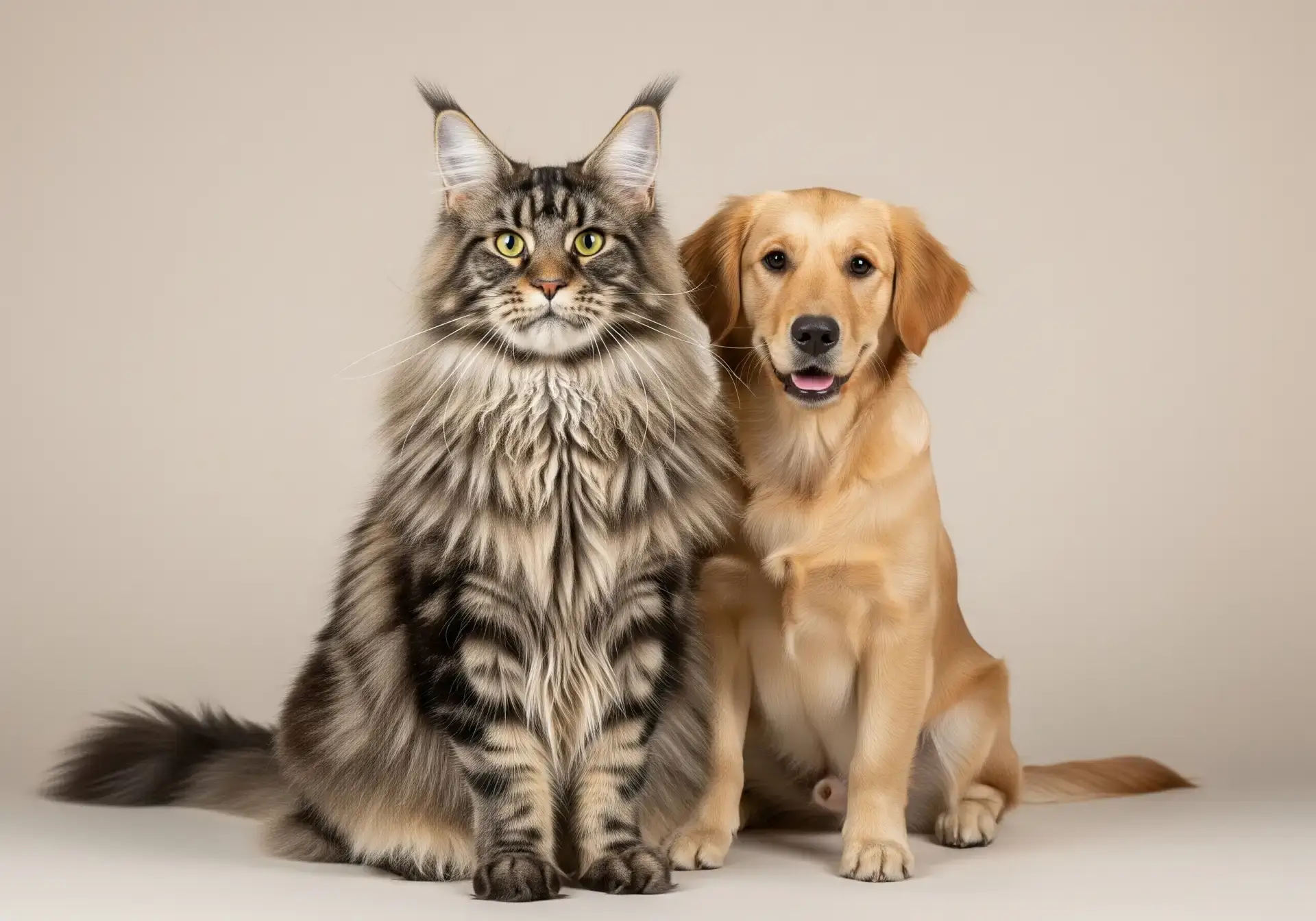
These breeds are less likely to chase or harm your Maine Coon. They often enjoy sharing space and may even play together.
Here’s a quick comparison of some top dog breeds and their compatibility with Maine Coons:
| Dog Breed | Temperament | Prey Drive | Cat Compatibility |
|---|---|---|---|
| Golden Retriever | Gentle, Patient | Low | Very Good |
| Labrador Retriever | Friendly, Playful | Low | Excellent |
| Cavalier King Charles Spaniel | Affectionate, Calm | Low | Very Good |
| Poodle | Smart, Sociable | Medium | Good |
Credit: meowoff.us
Worst Dog Breeds To Avoid
Some breeds just don’t mix well with cats. Dogs with high prey drive or aggressive personalities can stress or even harm a Maine Coon. Here are dog breeds to avoid:
- Greyhound – High prey drive, loves to chase
- Jack Russell Terrier – Energetic, often aggressive toward cats
- Siberian Husky – Strong prey drive, sometimes unpredictable
- Doberman Pinscher – Protective, sometimes aggressive
- Alaskan Malamute – Strong hunting instincts
- Fox Terrier – Loves to chase small animals
- Whippet – Quick, strong chase reflex
Avoid breeds known for chasing or rough play. Even a confident Maine Coon can feel threatened by these dogs.
Here’s a comparison of breeds to avoid:
| Dog Breed | Prey Drive | Energy Level | Cat Compatibility |
|---|---|---|---|
| Greyhound | Very High | High | Poor |
| Jack Russell Terrier | High | Very High | Poor |
| Siberian Husky | Very High | High | Poor |
How To Introduce A Maine Coon To A Dog
Introducing a Maine Coon cat to a dog takes patience and planning. Here’s a step-by-step process for a safe and smooth introduction:
1. Prepare Separate Spaces
Set up a safe room for your Maine Coon with food, water, litter box, and toys. Let your dog stay in another part of the house.
2. Exchange Scents
Swap bedding or toys between your cat and dog so they get used to each other’s smell. This helps reduce stress during the first meeting.
3. First Visual Contact
Use a baby gate or crate for the dog. Let your Maine Coon observe the dog from a safe distance. Watch both animals for signs of stress or curiosity.
4. Short, Supervised Meetings
Keep meetings brief at first (5–10 minutes). Let the cat choose to approach. Never force interaction. Reward calm behavior with treats.
5. Increase Time Together
Gradually lengthen meetings and reduce barriers. Continue close supervision.
6. Monitor Body Language
Look for relaxed posture, curiosity, and playful gestures. If you see growling, hissing, or aggressive body language, end the meeting and try again later.
Puppy Vs Adult Dog Introduction
Introducing a Maine Coon to a puppy is often easier. Puppies are less aggressive and can learn to respect the cat early. Maine Coons may play and bond quickly with puppies.
With adult dogs, it’s important to know their history. Were they raised with cats? Are they calm or excitable? Adult dogs may need extra time and training to adjust.
Practical Tips For Smooth Introduction
- Keep the first week calm and quiet.
- Never leave the dog and cat alone until you’re sure they’re safe together.
- Use positive reinforcement—treats, praise, petting.
- Allow the Maine Coon to retreat to a safe space.

Credit: www.patcamallierebooks.com
Signs It’s Going Well
You’ll know your Maine Coon and dog are getting along if you see:
- Relaxed body language in both animals
- Playful behavior (gentle pawing, chasing in fun)
- Eating near each other
- Sleeping in the same room
- Grooming each other (rare, but a great sign)
Some Maine Coons will even curl up next to their dog friend. Others might just share space calmly. Both are positive outcomes.
Warning Signs
While most Maine Coons adapt well, watch for signs that things aren’t going smoothly:
- Growling or hissing from either pet
- Chasing or rough play
- Hiding (cat stays out of sight)
- Refusing food
- Aggressive barking or lunging
If you see these, slow down the introduction process. Never punish either pet. Instead, offer breaks and try again later.
Are Maine Coons Good With Kids?
Maine Coons are often called “gentle giants.” They’re known for being patient with children, rarely biting or scratching unless severely provoked. Their playful nature matches well with kids, especially those who understand how to treat animals.
Some families report Maine Coons even acting as “protectors,” following their children around the house. However, always teach kids to handle cats gently and never pull their fur or tail.
Pairing a Maine Coon with dogs and kids can create a joyful, lively home—just make sure everyone learns to respect the animal’s boundaries.
Maine Coon Personality: Why They Stand Out
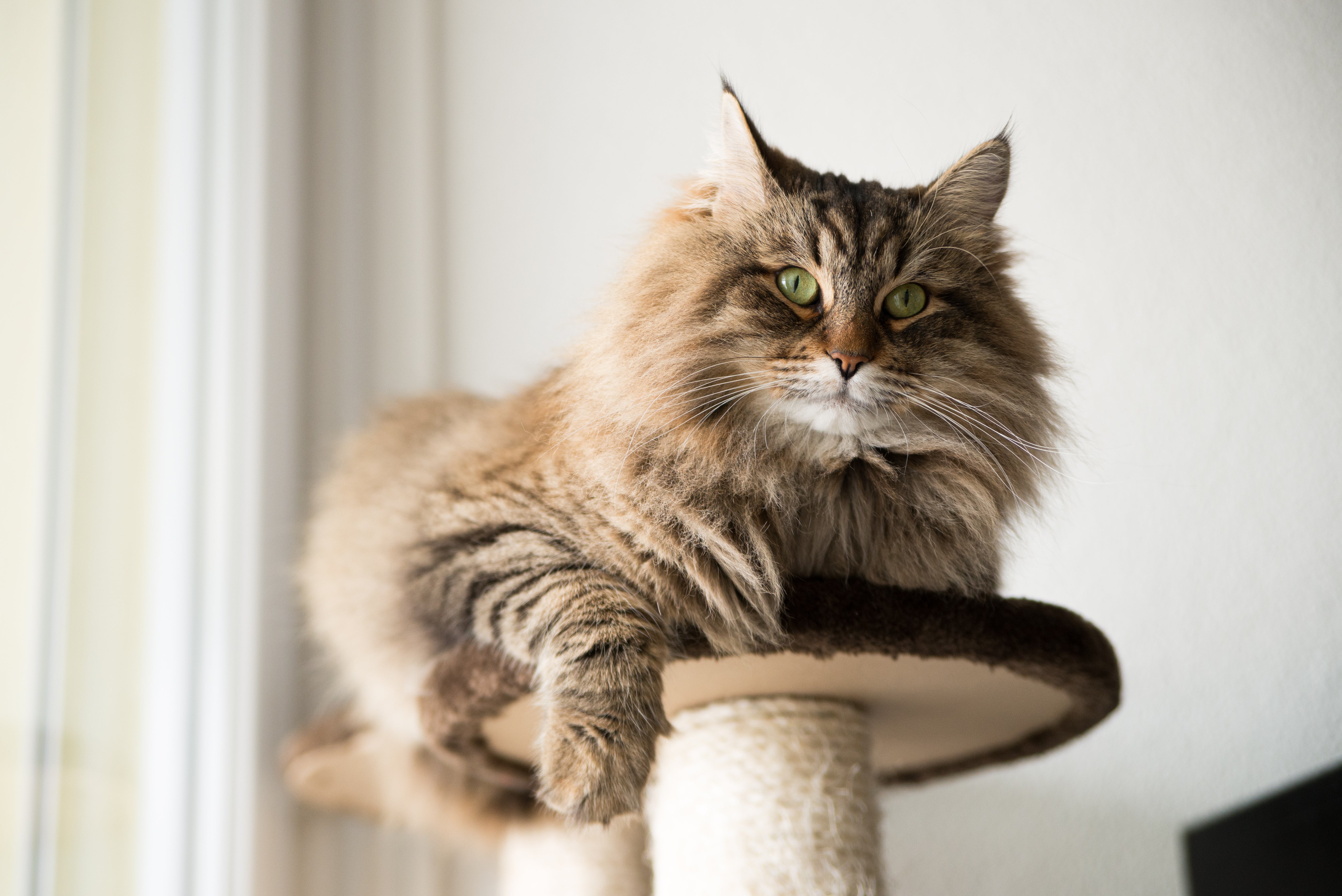
Maine Coons aren’t just big; they’re intelligent, curious, and often more dog-like than other cats. They enjoy games, fetch, and sometimes walks on a leash. This outgoing nature is why they often succeed in multi-pet homes.
Some owners notice Maine Coons acting as “mediators”—calming down a rowdy dog or comforting a nervous puppy. Their calm energy helps balance the mood in the house.
Another key insight: Maine Coons can adapt to new pets even if introduced later in life. Unlike some cats, they don’t become territorial as quickly.
Credit: www.petfinder.com
Data: Maine Coons In Multi-pet Homes
According to a survey by the Cat Fanciers’ Association, over 60% of Maine Coon owners report their cats live with at least one dog. Of those, about 70% say their Maine Coon and dog are “friendly” or “neutral,” while only 10% report serious problems.
Here’s a quick data snapshot:
| Survey Group | Dog Present | Positive Interaction | Negative Interaction |
|---|---|---|---|
| Maine Coon Owners | 60% | 70% | 10% |
| Other Cat Breeds | 40% | 50% | 20% |
This shows Maine Coons are more likely to get along with dogs than many other breeds.
Non-obvious Insights Most People Miss
- Early socialization is powerful: If you introduce your Maine Coon to dogs while it’s young, the bond is usually stronger and longer-lasting.
- Personality matters more than breed: While breed helps, the individual dog’s personality—playful, gentle, calm—has a bigger impact than breed alone.
- Space is key: Even with friendly animals, both need places to retreat. Maine Coons love high perches and quiet corners. Make sure your home offers these escape options.
Frequently Asked Questions
Do Maine Coon Cats Ever Attack Dogs?
Not usually. Maine Coons are confident but rarely aggressive. They may swipe if cornered, but they almost never attack unless they feel very threatened.
How Long Does It Take For A Maine Coon And Dog To Get Comfortable?
It depends on the animals. For some, it’s a few days; for others, it may take weeks. Most Maine Coons adjust within 2–4 weeks if introductions are slow and positive.
Should I Get A Maine Coon Kitten Or Adult If I Have A Dog?
Both can work. Maine Coon kittens often accept dogs quickly. Adult Maine Coons may take longer but usually adapt if the dog is gentle and introductions are careful.
Can Maine Coons Live With Multiple Dogs?
Yes, but only if the dogs are calm and cat-friendly. Multi-dog homes require extra supervision and space for the cat to escape if needed.
Where Can I Learn More About Maine Coon Cat Behavior?
You can find more details at the Wikipedia Maine Coon page.
Maine Coon cats are among the best breeds for multi-pet homes. With their relaxed attitude, intelligence, and strong personality, they’re likely to accept a dog as a friend. Always choose the right dog breed, introduce them slowly, and watch for signs of stress or friendship.
With patience and care, you’ll enjoy a peaceful home filled with happy pets.
**As an Amazon Associate, I earn from qualifying purchases.**