No, it is illegal for private citizens to own a Pallas cat anywhere in the world. These wild cats face strict protection under international laws, regional exotic pet bans, and conservation acts in their native range countries like Mongolia, China, and Russia.
- Private ownership of a Pallas cat (manul) is banned by law in virtually every jurisdiction.
- The species holds protected status under international agreements like CITES Appendix II.
- Biological needs and extreme vulnerability to domestic diseases make home care fatal for the animal.
- Only accredited zoos and research facilities hold legal permits for keeping them.

Can You Legally Own a Pallas Cat?
No private person can legally own a Pallas cat. Governments treat the manul as a wild predator rather than a domestic pet. Strict wildlife laws protect the species across its natural habitat in Central Asia, stretching from the steppes of Mongolia and the high-altitude deserts of Tibet to parts of Iran, Afghanistan, and Russia. Local authorities issue permits exclusively to accredited zoos, research centers, and conservation breeding programs.
Trying to acquire one of these unusual felines outside of institutional channels means running afoul of severe wildlife protection statutes. Law enforcement agencies across the globe treat the possession of unauthorized wild felids as a serious offense, often carrying heavy fines, property seizure, and potential jail time. Furthermore, international law places heavy restrictions on these animals. CITES Appendix II regulates the trade of Pallas cats globally, meaning that moving a wildcat across international borders requires complex paperwork, historical verification, and high-level government approval. Private buyers cannot meet these strict legal standards under any circumstances.
What does international law say?
Global trade agreements restrict the movement of wild felines to prevent poaching and unsustainable trafficking. The Convention on International Trade in Endangered Species of Wild Fauna and Flora (CITES) monitors populations to track cross-border movements. Countries sign international treaties to protect native fauna from the global exotic pet trade. Commercial sale remains strictly illegal under these treaties, and any specimen crossing international boundaries without authorized permits is subject to immediate confiscation by customs officials.
When governing bodies evaluate wildlife protection, they look closely at the origin of the animal. Because manuls cannot be legally harvested from the wild, and because captive populations are managed strictly for species survival rather than commercial exchange, no legal supply chain exists for private buyers. Anyone offering a Pallas cat for sale online or through private networks is operating an illegal wildlife trafficking ring.
Are there any legal loopholes for permits?
Loopholes simply do not exist for private exotic pet owners. Special licenses require institutional backing, certified veterinary staff, specialized perimeter security, and adherence to strict public safety standards. A standard homeowner, farm owner, or hobbyist fails these background checks and facility inspections instantly.
Government agencies that oversee wildlife permits demand proof that the applicant represents an accredited scientific or educational institution. These facilities must demonstrate how housing a manul directly benefits conservation, research, or public education. Private living rooms, backyards, and makeshift enclosures fail to meet even the baseline requirements for wild animal welfare, ensuring that individual ownership applications are summarily rejected.
What Are the Laws Regarding Pallas Cats by Region?
Legal restrictions vary by country, but the ultimate outcome remains identical everywhere: local governments ban wild felines in private homes.
In the United States, state laws prohibit the possession of small wild cats without specialized credentials. States classify the manul as a dangerous exotic animal alongside tigers, lions, and leopards. While some states have laxer laws for certain exotic species, nearly all jurisdictions require a Class C USDA license for exhibitors or outright ban restricted wildlife for private individuals. Most states deny permits to individual citizens entirely.
European and British laws use similar frameworks. The UK Dangerous Wild Animals Act requires a special license, proof of insurance, and rigorous enclosure inspections by local authorities. Local councils routinely reject applications for private properties because the animal’s welfare needs and public safety risks cannot be safely managed in a residential setting.
In the native range countries—such as Mongolia, China, and Russia—the manul is protected by national conservation laws. Poaching, capturing, or keeping a wild Pallas cat in a residential setting carries severe criminal penalties. Ranger patrols and wildlife authorities actively enforce these protections to safeguard fragile remaining populations.
| Feature | Pallas Cat (Manul) | Domestic Cat |
|---|---|---|
| Legal Private Ownership | Illegal in virtually all jurisdictions | Legal worldwide |
| Domestication Status | Wild animal (never domesticated) | Fully domesticated species |
| Primary Habitat | Rocky steppes and montane deserts of Central Asia | Human households and urban environments |
| Immune System | Extremely fragile; highly susceptible to toxoplasmosis | Adapted to common domestic pathogens |
| Conservation Status | Protected under international wildlife agreements | Not applicable |
| Typical Lifespan in Care | Significantly reduced in non-specialized settings | 12 to 18 years in domestic homes |
| Dietary Specialization | Strict obligate carnivore requiring whole prey items | Commercial kibble, wet food, and specialized diets |

Why Have Pallas Cats Never Been Domesticated?
Wild animals require thousands of years of selective breeding, known as artificial selection, to accept human cohabitation safely and predictably. Pallas cats evolved on the cold, rocky steppes and high-altitude semi-deserts of Central Asia. They developed solitary instincts for survival in harsh, unforgiving terrain where resources are scarce.
Domestic cats share social habits that help them bond with humans, traits inherited from their ancestral wildcat relative, the African wildcat (*Felis lybica*). Manuls lack these social traits entirely. Captive individuals display high stress levels, unpredictable temperaments, and extreme territorial aggression when confined near humans.
Evolutionary background
Altitude, wind, and extreme cold shaped the biology of the manul over millions of years. High-altitude environments lack abundant, easily accessible food sources. Animals must hunt constantly and defend large territories alone to survive the winter freezing temperatures.
Unlike domestic cats that evolved alongside human agricultural settlements—benefiting from rodent populations near grain stores—Pallas cats remained isolated in remote, rugged mountain ranges. This lack of historical exposure to human settlements means they never underwent the generational habituation that turns wild animals into docile companions.
Behavioral traits of the manul
Manuls react to stress, confinement, and unfamiliar stimuli with immediate hostility and defensive posturing. Handling causes severe panic attacks, which can trigger physiological shock. They do not purr or seek affection in the way domestic cats do; instead, they view human hands and close proximity as threats.
When cornered, an adult manul will use its sharp teeth and powerful claws defensively. Their natural instinct is to fight fiercely rather than flee, making them completely unsuited for interaction with family members, guests, or household pets.
Why Do Pallas Cats Make Terrible Pets?
Home environments destroy the health and spirit of a wild cat. Captive care by inexperienced owners leads to rapid physical decline and premature death.
Medical fragility poses the biggest threat to captive manuls. Their immune systems lack resistance to common domestic pathogens found in standard households. Toxoplasmosis—a parasitic infection harmless or manageable in many domestic animals—infects captive Pallas cats easily and proves fatal in a remarkably short timeframe.
Dietary requirements demand specialized whole prey items such as specific rodents and birds. Standard commercial pet food, cooked meats, or improper nutritional supplements cause severe metabolic bone disease and nutritional deficiencies. Indoor spaces fail completely to replicate cold, dry mountain climates, causing respiratory distress and overheating.
Medical and immunological fragility
Low parasite resistance comes from isolated evolution. Wild populations high in the Asian steppes never encounter the wide array of pathogens carried by domestic pets, livestock, and humans. Common bacteria in house dust, soil, and municipal water can make them violently ill.
Veterinary treatment for wild felines is also exceptionally difficult. Standard tranquilizers and medications used for domestic cats can have adverse or fatal effects on a manul due to their unique physiological responses. Diagnosing illnesses requires specialized equipment and sedation protocols that only experienced zoo veterinarians can provide safely.
Environmental and dietary requirements
Heating systems in modern homes cause chronic respiratory distress for an animal built for freezing elevations. Their extraordinarily thick winter coats, which help them endure temperatures well below freezing, cause them to overheat rapidly inside climate-controlled buildings.
Dietary maintenance is equally demanding. A manul cannot thrive on processed cat food. They require fresh, whole animal carcasses to maintain their dental health, digestive tract functionality, and nutrient balance. Sourcing and preparing this specialized diet requires industrial refrigeration and strict hygiene protocols that are impossible to maintain in a residential kitchen.
Where Can You Legally See a Pallas Cat?
Animal lovers who wish to observe a manul must visit accredited institutions where these animals receive expert care. Zoos provide specialized veterinary attention, climate-appropriate habitats, and carefully formulated diets.
Association of Zoos and Aquariums (AZA) and European Association of Zoos and Aquaria (EAZA) facilities participate in global conservation efforts. These parks educate the public about fragile steppe ecosystems and the conservation challenges facing Central Asian wildlife. Professional keepers manage cooperative breeding programs, known as Species Survival Plans, to maintain healthy, genetically diverse assurance populations without harming wild groups.
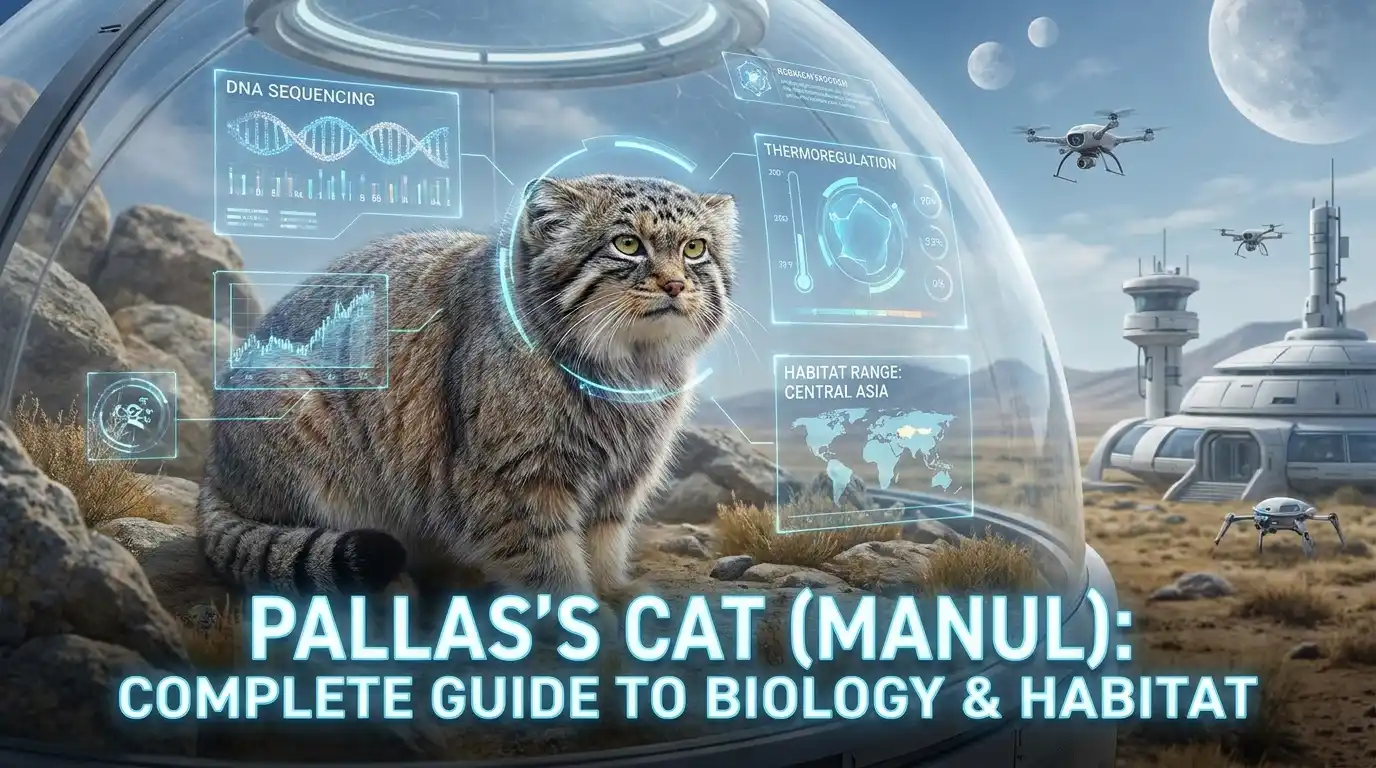
Visiting an accredited zoo is the only ethical and legal way to appreciate the unique appearance of the Pallas cat, from its flattened ears and round pupils to its remarkably dense fur coat.
Frequently Asked Questions
Is it legal to own a Pallas cat in the United States?
No US state permits private citizens to keep a Pallas cat as a pet. State laws classify them as dangerous wild animals requiring specialized permits. Permits go exclusively to licensed zoos, sanctuaries, and research institutions.
Can you buy a Pallas cat kitten?
No breeders sell Pallas cat kittens legally to the public. Commercial breeding of manuls for the pet trade violates international wildlife laws and conservation standards. Every captive animal belongs to a managed conservation program.
Are Pallas cats dangerous to humans?
Manuls possess sharp teeth and powerful claws. Wild instincts make them defensive around people. Bites and scratches from adult specimens cause serious injuries and can transmit infections, making them hazardous to handle.
Why do Pallas cats die easily in captivity?
Captive manuls suffer from extreme immune system vulnerabilities. Toxoplasmosis kills them quickly because they lack natural resistance to the parasite. Stress, improper diets, and poor climate control also drastically shorten their lifespans.
How much does a Pallas cat cost?
You cannot buy one legally, so no legitimate retail market exists. Illegal wildlife traffickers may quote high prices, but purchasing a wild animal breaks international law, supports criminal poaching networks, and incurs severe criminal penalties.
Are Pallas cats endangered?
Conservation groups classify the species based on regional population data, often listing them as Least Concern or Near Threatened due to wide distribution, but local populations face severe declines. Habitat loss, mining, overgrazing, and illegal hunting threaten wild groups. Protected status prevents commercial exploitation across their native range.
**As an Amazon Associate, I earn from qualifying purchases.**