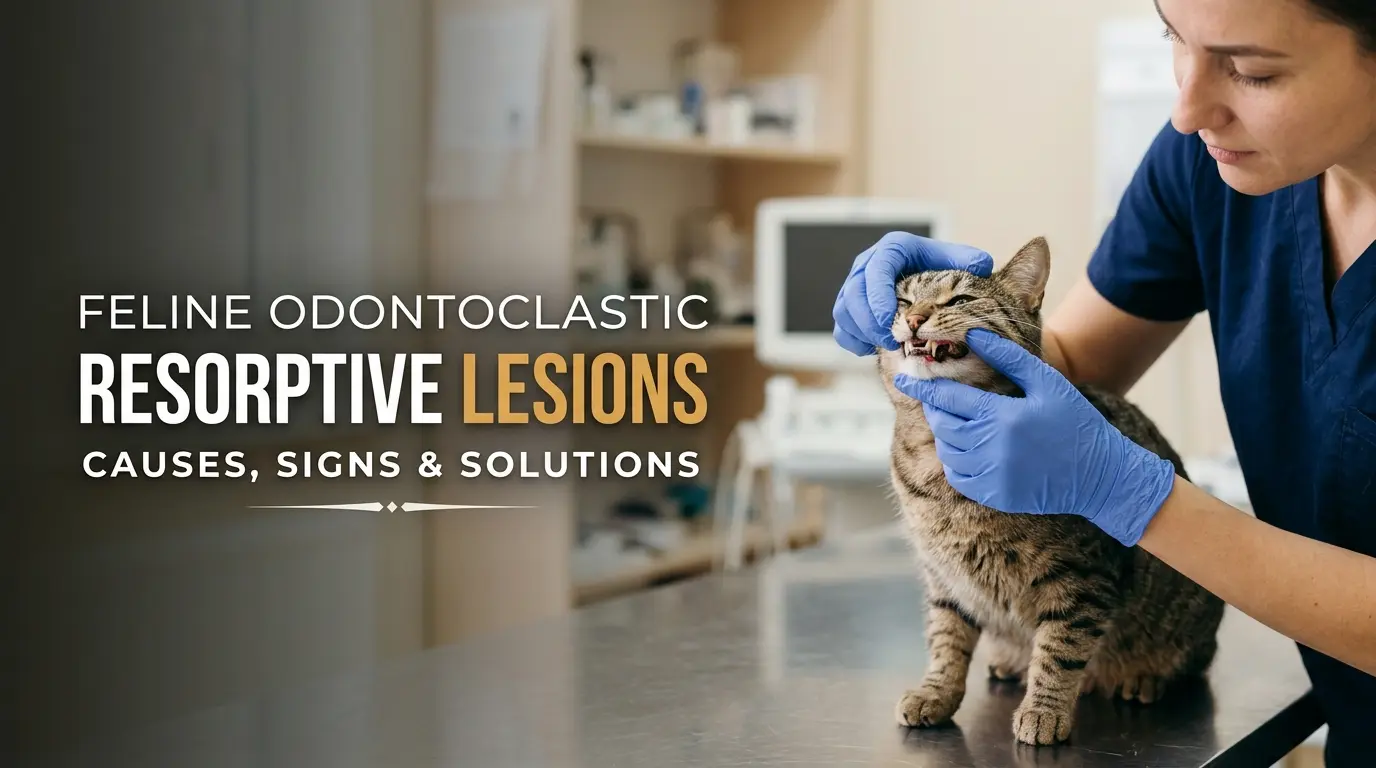
Understanding your cat’s FORL diagnosis can feel overwhelming. If your veterinarian said your cat has feline odontoclastic resorptive lesions (FORLs), you are not alone. These dental problems are common, often painful, and can be confusing for cat owners. This article explains everything in plain language, from what FORLs are to treatment and prevention. By the end, you will know how to help your cat live a more comfortable life.
What Are Feline Odontoclastic Resorptive Lesions?
FORLs (also called feline tooth resorption lesions) are defects in a cat’s teeth. In these cases, the body’s own cells—called odontoclasts—begin to break down and absorb the hard tissue of the tooth. This process usually starts at the gum line and progresses, causing pain and sometimes infection.
Instead of decaying from the outside like a cavity, a FORL eats away at the tooth from the inside or around the root. Over time, the cementum and dentin (protective layers of the tooth) are destroyed, making the tooth weak and sensitive.
You might hear your vet use other names for this condition: odontoclastic lesion cat, tooth resorption, or just “resorptive lesion.”
What Causes Foirls?
The exact cause is still unknown. Research suggests that FORLs may be linked to:
- Inflammation in the mouth (periodontal disease)
- Changes in the immune system
- Diet, especially foods that stick to teeth or lack certain nutrients
- Genetics, as some breeds like Siamese and Persians are more prone
Unlike cavities in humans, FORLs are not caused by bacteria or poor brushing alone. Even cats with clean teeth can develop them. A less obvious factor is the role of odontoclasts—these cells are meant to remodel bone but sometimes attack healthy teeth by mistake.

Credit: orvetdentalspecialists.com
How Common Are Foirls In Cats?
FORLs are very common, especially in cats over five years old. Studies estimate that up to 60% of cats will develop at least one resorptive lesion in their lifetime. In dental exams, some clinics report that as many as one in three adult cats has at least one affected tooth.
Interestingly, indoor cats are just as likely to get FORLs as outdoor cats. There’s no strong link between FORLs and gender, but purebred cats may have higher risk.
How Are Foirls Diagnosed?
Physical Examination
Your veterinarian will look for signs like:
- Red, inflamed gums
- Bleeding at the gum line
- A visible hole or defect in the tooth
- Pain when touching the mouth
Some cats drool, stop eating crunchy food, or paw at their face. However, many cats hide pain, so physical signs can be easy to miss.
Dental X-rays (essential)
Dental X-rays are critical for diagnosis. Many lesions are hidden below the gum line and can’t be seen with the naked eye. X-rays show how much of the tooth structure is lost, and help your vet decide the best treatment.
Here’s how a physical exam compares to dental X-rays:
| Method | What it detects | Limitations |
|---|---|---|
| Physical exam | Visible lesions, gum changes | Misses hidden lesions |
| Dental X-ray | Internal lesions, root resorption | Requires anesthesia, special equipment |
Forl Staging And Classification (type 1, 2, 3)
FORLs are staged by severity using the AVDC staging system (American Veterinary Dental College). Classification also depends on the pattern of resorption.
| Type | Description | Key Feature |
|---|---|---|
| Type 1 | External root resorption with inflammation | Root remains visible on X-ray |
| Type 2 | Replacement resorption (tooth root replaced by bone) | Root disappears on X-ray |
| Type 3 | Both Type 1 and 2 in same tooth | Mixed features |
Staging ranges from Stage 1 (mild enamel loss) to Stage 5 (almost entire tooth lost). Early stages are hard to spot without X-rays.
Treatment Options By Type
The main treatment for FORLs is tooth extraction. The reason: these lesions are painful and do not heal on their own. The treatment depends on the lesion type:
- Type 1 (external root): Extraction of the whole tooth, including roots, is needed.
- Type 2 (replacement resorption): Only the crown may be removed (crown amputation), since the root is being replaced by bone.
- Type 3 (mixed): Extraction is often recommended, but the approach depends on X-ray findings.
Simple fillings or antibiotics do not help. Pain relief and antibiotics may be used after surgery.
Here’s a summary:
| Lesion Type | Typical Treatment |
|---|---|
| Type 1 | Full extraction |
| Type 2 | Crown amputation |
| Type 3 | Case-by-case basis |

Credit: staroftexasvet.com
What If My Cat Has Multiple Foirls?
It’s common for cats to have several affected teeth at once. In these cases, your vet may suggest removing all painful teeth during one procedure. Cats adapt well to missing teeth, and eating is still possible.
If only one or two lesions are found, your vet may treat those first and monitor the rest. Regular check-ups are important, as new FORLs can develop later.
Quality Of Life After Forl Treatment
Most cats feel much better after painful teeth are removed. Within days, owners often notice:
- Increased appetite
- More interest in play
- Less drooling or face pawing
Some cats even gain weight and become more social. It’s a myth that cats need teeth to eat; many thrive on soft or even dry food after extractions.
One insight many owners miss: untreated FORLs can lead to chronic pain, behavior changes, and secondary infections. Early treatment greatly improves quality of life.

Credit: www.veterinarydentalcenter.com
Can Foirls Be Prevented?
Unfortunately, there is no proven way to prevent FORLs entirely. Good dental care—like brushing and regular vet checks—can help detect problems early, but does not stop odontoclasts from attacking teeth.
Some tips:
- Schedule annual dental exams and X-rays, especially for cats over age 5
- Feed a balanced diet (ask your vet for recommendations)
- Watch for subtle signs of mouth pain
Researchers are still studying prevention. For now, early detection and treatment are the best tools.
For more, see the American Veterinary Dental College guidelines.
Frequently Asked Questions
What Are Foirls In Cats?
FOIRLs are areas where a cat’s tooth structure is destroyed by the body’s own cells. This leads to pain, loose teeth, and sometimes infection. The full term is feline odontoclastic resorptive lesions.
How Is A Forl Diagnosis In Cats Confirmed?
A diagnosis is confirmed with a dental X-ray. Physical exams can suggest FORLs, but X-rays reveal the extent and type of dentin resorption.
Can Forls Heal Without Treatment?
No, FORLs do not heal naturally. Extraction is the only reliable way to remove pain and prevent further damage.
Is Extraction Forl Always Necessary?
In almost all cases, yes. Fillings or antibiotics are not effective. Extraction is the gold standard for pain relief and stopping the disease.
Are Certain Breeds More At Risk For Forls?
Yes, breeds like Siamese, Persian, and British Shorthair may be more prone. However, any cat can develop FORLs regardless of breed or lifestyle.
A FORL diagnosis can sound scary, but with the right care, your cat can live a happy, pain-free life. Understanding the signs, getting prompt treatment, and scheduling regular dental check-ups are the best ways to support your feline friend’s health.
**As an Amazon Associate, I earn from qualifying purchases.**