No, Pallas cats do not make good pets. They are 100 percent wild animals with fierce defensive instincts, fragile immune systems, and strict legal protections that ban private ownership everywhere.
- Manuls are wild predators from Central Asia and lack domestication.
- Private ownership is strictly illegal under international laws and local statutes.
- Captive animals face severe health threats like fatal toxoplasmosis.
- Their sharp teeth and aggressive defense styles make them dangerous to humans.

Can You Keep a Pallas Cat as a Pet?
You cannot keep a Pallas cat as a pet under any circumstances. People often see viral photos of these grumpy-looking wild cats and want one at home. Social media posts make them look like fluffy house cats because of their dense, wide-set fur and famously expressive faces. Reality proves entirely different. Manuls remain wild animals with fierce survival instincts. They belong on the cold steppes of Central Asia, not inside a living room.
Trying to keep a wild cat brings massive legal trouble. Governments protect these rare animals through strict laws. No pet store or breeder sells them legally. Owning one breaks international wildlife protection treaties designed to stop the trafficking of endangered and vulnerable species. Animal control agents and wildlife officers seize illegal pets immediately upon discovery. Owners face heavy fines, loss of property, and potential jail time for possessing restricted wildlife.
Beyond the legal hurdles, housing a wild animal disrupts local ecosystems if the animal ever escapes. Pallas cats are solitary predators with large home ranges in the wild. Attempting to force one into a domestic environment creates an unsustainable, stressful situation for both the animal and the human caregiver. Even professional handlers with decades of zoo experience approach manuls with extreme caution, utilizing heavy protective gear and specialized transfer chutes to avoid injury.
Why Do Pallas Cats Make Terrible Pets?
Wild cats bite hard and reject human affection. Breeders never bred manuls to live with humans over generations. Domestic cats share your couch because humans changed their traits across thousands of years of selective breeding, filtering out extreme aggression and hyper-defensive behaviors. Manuls retain every single survival instinct of their wild ancestors. They view human hands and faces as threats rather than sources of comfort or food.
Litter box training fails completely with these animals. Wild felines mark territory using strong scent glands and urine sprays to signal boundaries to rivals. Your furniture, drywall, and carpets suffer permanent damage from this instinctual behavior. Their dense coats, which are designed to shed dirt and water in rocky environments, trap debris and track mud. Furthermore, indoor carpeting and household heating clash with their biological need for cool, dry stone shelters.
Dietary needs pose another impossible hurdle for human owners. Manuls hunt live pikas, small rodents, and ground-nesting birds in high-altitude environments. Commercial cat food, even high-end raw diets designed for domestic breeds, causes severe nutritional deficiencies and organ failure in wild felids. Fresh whole prey remains mandatory for their survival, meaning owners would need to source and feed whole rodents daily. Feeding a wild predator demands specialized veterinary knowledge, secure handling equipment, and constant expense.

Are Pallas Cats Legal to Own?
International agreements protect manuls across their natural range. The Convention on International Trade in Endangered Species (CITES) lists them under Appendix II. This classification controls all cross-border movement of the species to prevent overexploitation. Mongolia, Russia, and China enforce strict domestic laws protecting wild populations from poachers and the illegal pet trade.
National laws in the United States, Canada, and the European Union ban private citizens from owning wild felids. Local state and provincial laws add extra layers of restriction, often requiring specialized permits that are exclusively granted to zoological institutions. Animal welfare officers and federal agents confiscate restricted species found in private homes without warning. Zoos, wildlife sanctuaries, and accredited research institutions hold the only legal permits for housing these animals under controlled, highly secure conditions.
If someone offers to sell you a Pallas cat online or through an underground network, you are dealing with wildlife traffickers. Purchasing or possessing such an animal violates federal smuggling laws and contributes directly to the decline of wild populations. Conservation groups actively monitor illegal online trade to crack down on these criminal rings.
Comparison: Domestic Cat vs. Pallas’s Cat (Manul)
| Trait | Domestic Cat (Felis catus) | Pallas’s Cat (Otocolobus manul) |
|---|---|---|
| Domestication Status | Fully domesticated over thousands of years | 100 percent wild animal, never domesticated |
| Temperament | Affectionate, social, adaptable to humans | Solitary, highly defensive, aggressive when cornered |
| Legal Ownership | Legal and common worldwide | Strictly illegal for private citizens; protected by law |
| Dietary Requirements | Commercial cat food, kibble, wet food | Fresh whole prey (pikas, rodents, birds) |
| Immune System | Resilient to typical domestic household pathogens | Extremely fragile; highly prone to fatal toxoplasmosis |
What Makes Pallas Cats Unique Wild Animals?
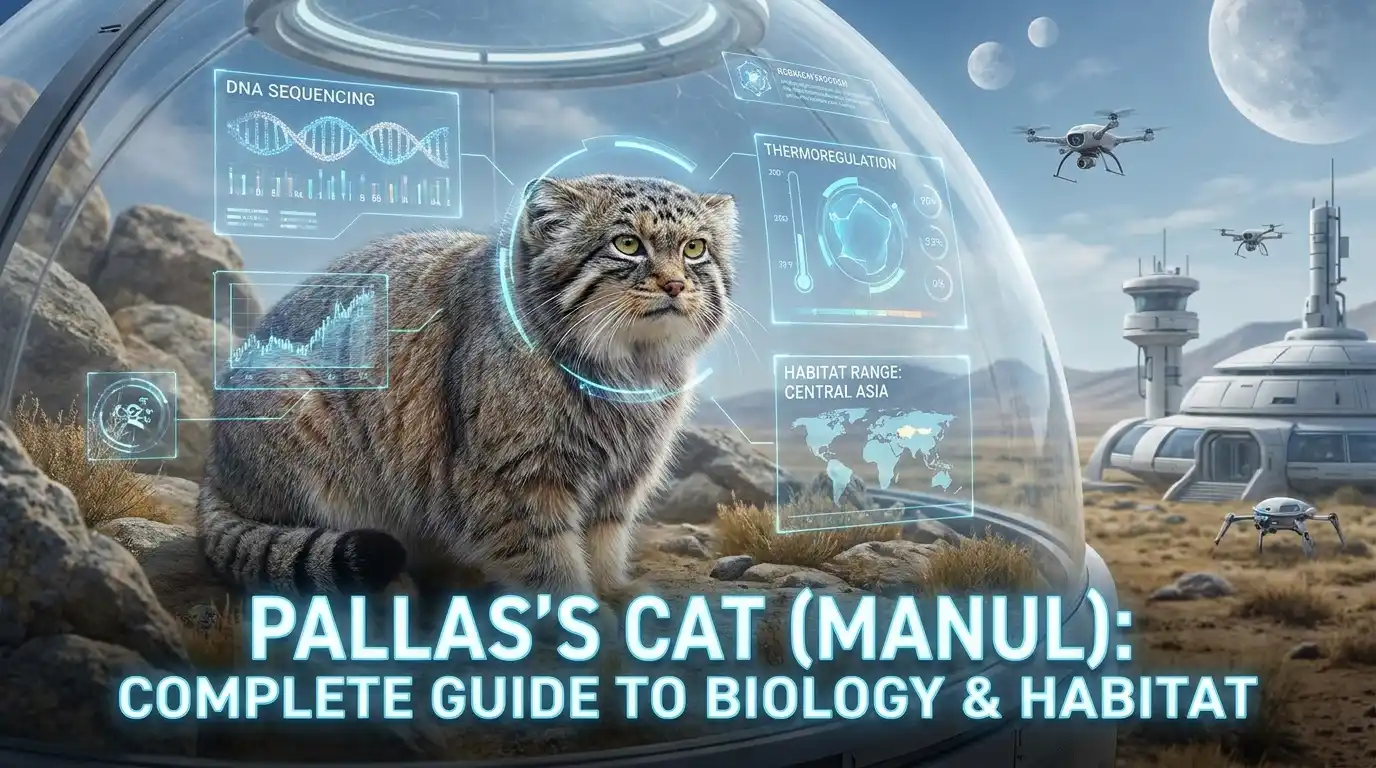
Free-roaming manuls endure extreme weather in Central Asia. Winter temperatures drop far below freezing across rocky mountains, high plateaus, and dry steppes. Thick fur coats protect their bodies from harsh winds, ice, and deep snow. In fact, their fur is the densest and longest of any cat species, which creates an optical illusion that makes them look much heavier and rounder than their actual lean frames.
Low-set ears help them hide behind flat rocks and sparse vegetation while stalking prey. Because their natural habitat lacks tall trees and dense forests, they rely on ground cover, boulders, and scree slopes to ambush targets. Their flattened facial profile and low ears allow them to peek over the tops of rocks while keeping the rest of their body hidden from avian and terrestrial predators.
Round pupils set manuls apart from typical felines. Domestic cats have vertical slit pupils for hunting in dim light and managing bright sunlight in enclosed spaces. Manuls retain circular pupils throughout their lives, a feature shared with big cats like lions and tigers. Biologists link this trait to their specific daytime hunting habits in open terrain. They spot small rodents and pikas from great distances across bright, sunlit grasslands.
What Are the Major Health Risks of Keeping a Manul in Captivity?
Captive manuls suffer from exceptionally fragile immune systems. Mountain environments and high-altitude steppes keep wild populations free from many lowland pathogens, bacteria, and viruses. Moving a wild cat from its clean, dry native habitat to a standard backyard, basement, or home exposes it to lethal infections that ordinary house cats easily resist.
Toxoplasmosis poses a constant, deadly threat to captive wild felines. Their bodies lack genetic resistance against common protozoan parasites found in low-altitude soil and domestic cat litter. Kits born in captivity often die before reaching adulthood due to this single infection, which ravages their nervous systems and internal organs. Professional zoological parks use strict quarantine protocols, filtered air, and specialized veterinary teams just to keep captive populations alive and healthy.
Stress destroys the physical health of a captive wild cat just as fast as disease. Small enclosures, unfamiliar household noises, artificial lighting, and human handling trigger chronic anxiety. This mental strain suppresses their immune response further, leaving them vulnerable to secondary infections. Animals decline rapidly under poor conditions, often refusing food or developing stereotypic pacing behaviors. Respecting their wild nature means leaving them in their natural habitat or supporting in-situ conservation efforts rather than attempting private housing.
Frequently Asked Questions
Are Pallas cats friendly to humans?
Manuls possess wild temperaments and reject human touch entirely. They attack when approached, handled, or cornered. Their sharp claws and powerful jaws inflict severe puncture wounds and lacerations. Social media videos showing tame behavior represent rare professional handlers or keepers who work with specific, habituated individuals under controlled circumstances, not house pets.
Can a Pallas cat mate with a house cat?
Genetic barriers prevent successful breeding between manuls and domestic cats. Different chromosome counts stop viable embryos from developing into healthy offspring. Even if attempted, wild males and house cats exhibit extreme hostility toward one another and would fight rather than mate.
Can I own a Pallas cat in the USA?
Federal and state laws prohibit private ownership of Pallas cats across the United States. Permits exist exclusively for accredited zoos, wildlife sanctuaries, and scientific research facilities that meet rigorous housing and safety standards. Violating these federal and state laws results in heavy criminal charges, large financial fines, and immediate animal confiscation.
How much is a Pallas cat worth?
No legal market price exists for manuls because private sales violate international wildlife laws and treaties. Poachers dealing in illegal exotic animals quote high black-market prices, but purchasing an animal through these channels supports criminal enterprises, smuggling networks, and animal cruelty.
Do Pallas cats purr like domestic cats?
Manuls make various vocalizations like sharp grunts, low growls, and high-pitched social calls. Biologists debate their exact sound range compared to domestic felines and big cats. They never sit comfortably on laps purr-singing like a house cat.
**As an Amazon Associate, I earn from qualifying purchases.**