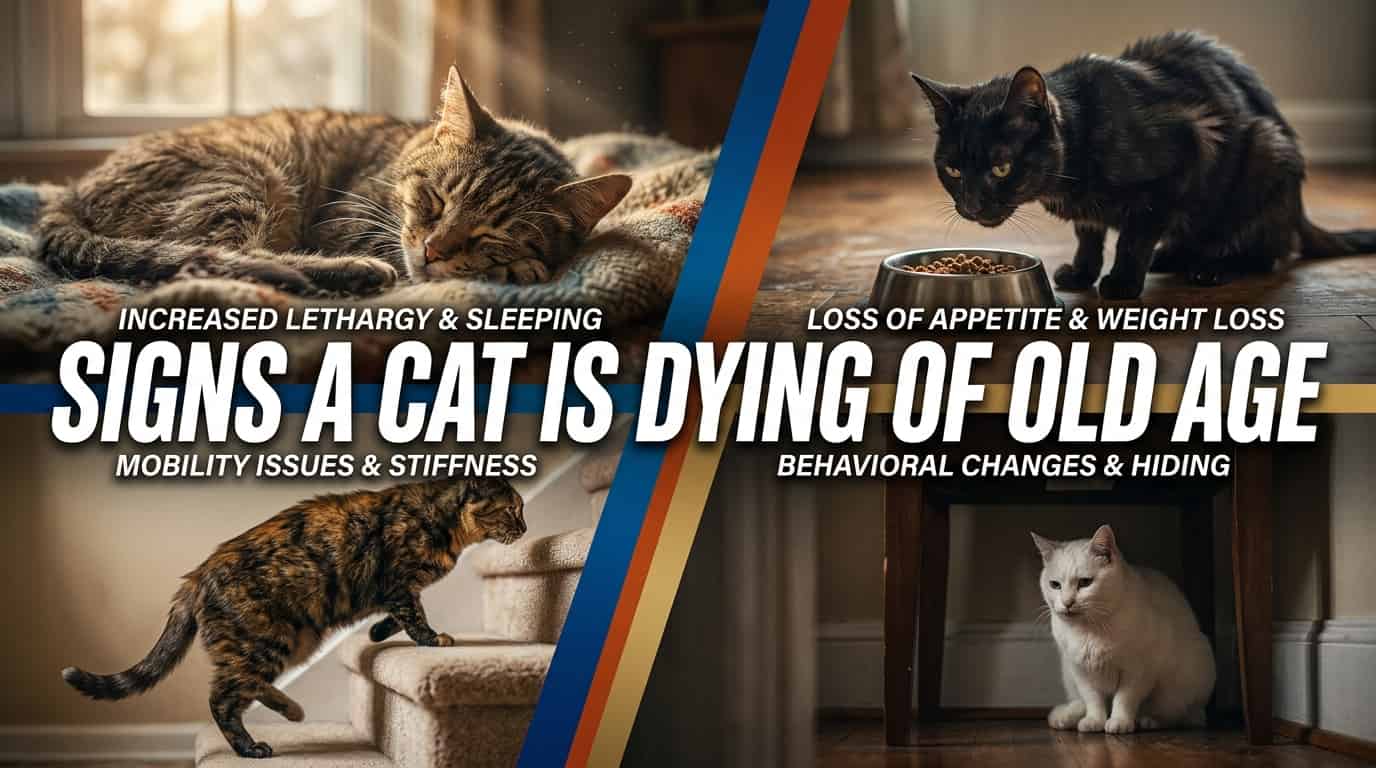
Knowing when a beloved cat is nearing the end of life is never easy. But being able to recognize the signs a cat is dying of old age can help you provide comfort, dignity, and love in their final days. For many owners, the hardest part is not knowing what to expect or how to help. If you understand the changes that happen as a senior cat declines, you can make thoughtful decisions and ensure your companion’s last chapter is as gentle as possible. This guide explains the full journey, from early signs of decline to the last hours, home comfort, the choice between natural death and euthanasia, and how to cope with loss. Knowing these signs helps you give your cat the best possible end-of-life care.
Early Signs A Senior Cat Is Declining
Aging cats do not usually show dramatic changes all at once. The process is gradual, with small signs appearing first. These early signs often show a cat’s body is slowing down or struggling to recover as it once did. Noticing these signs does not always mean death is near, but they often mean your cat is in their final year or months.
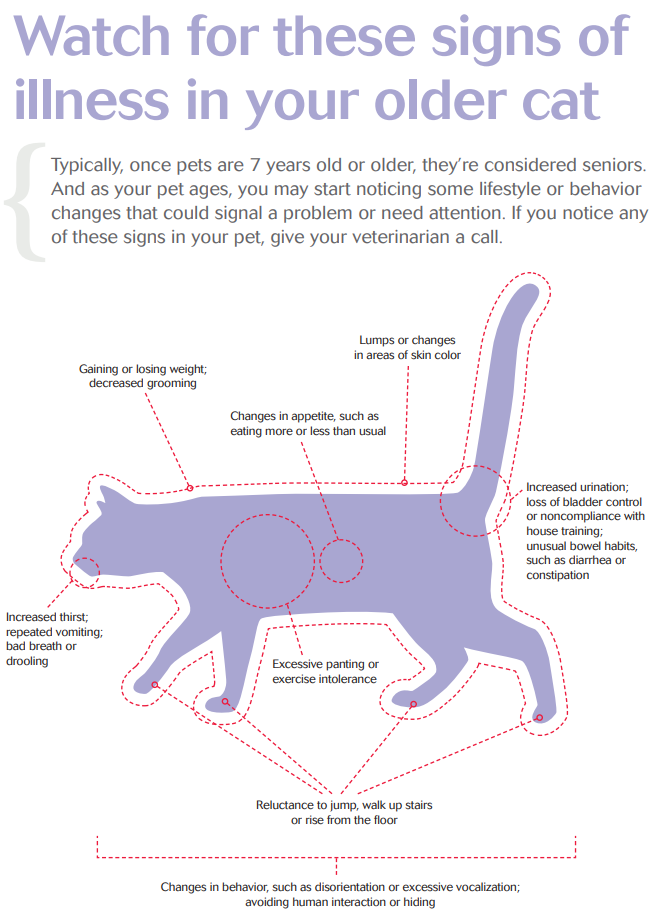
- Reduced activity: Older cats often sleep more and play less. You might see your cat spend more time in quiet places or hesitate to climb or jump.
- Loss of appetite: A senior cat may become pickier about food or eat much less than before. Sometimes, this is due to dental pain, but it can also mean organs are weakening.
- Weight loss: Muscle loss and thinning are common as cats age, especially if they eat less. You might feel more bones under their fur, even if they eat normally.
- Poor grooming: Elderly cats may have messy fur, mats, or dandruff because they groom less or cannot reach all areas.
- Changes in litter box habits: Watch for accidents, urinating outside the box, or straining. These can mean kidney, bladder, or mobility problems.
- Confusion or anxiety: Some older cats become restless, vocalize more (especially at night), or seem disoriented. This can be a sign of feline cognitive dysfunction, similar to dementia in humans.
- Hiding more often: While cats naturally seek privacy, a cat that hides much more than before may be feeling unwell.
- Less interest in people: If your cat stops greeting you, following you, or wanting attention, it may be a sign they are not feeling well.
- Bad breath or drooling: These signs often mean dental disease or kidney failure, both common in old age.
- Changes in walking or movement: Limping, stiffness, or reluctance to move can show arthritis or general weakness.
Each cat is different. Some may have only one or two of these signs for months. Others may decline more quickly. It’s important to watch for patterns and talk to your veterinarian about what you see.
Signs A Cat Is Actively Dying (final Days/hours)
When a cat is truly at the end of life, changes become more dramatic. The final days or hours are often marked by specific symptoms. Recognizing these helps you know when death is very near and lets you focus on comfort.
Withdrawal And Hiding
In their last phase, most cats will seek solitude. They may find a quiet corner, behind furniture, or even a closet. This is a natural behavior, not rejection. Cats often instinctively hide when weak or dying to feel safe. Some may refuse to move from their chosen spot, even for food or attention.
Trying to force them out usually causes more stress. Instead, let them stay where they feel secure and bring comfort to them.
Refusing Food And Water
A cat actively dying will almost always stop eating and drinking. This is a clear sign that the body is shutting down. Even favorite foods or treats are ignored. Sometimes, a cat will lick at water but not actually drink.
If you notice your cat has not eaten or drunk anything for more than a day, and other signs are present, death is likely close. Do not try to force-feed, as this can cause choking or distress.
Laboured Or Irregular Breathing
As organs fail, breathing often changes. Dying cats may breathe with difficulty, with open mouths, or with deep, slow breaths followed by rapid ones. Some cats make rattling or gurgling noises. Breathing may pause for several seconds, then restart. These patterns, called “agonal breathing,” can be distressing to watch but are part of the natural process.
Keep the environment calm and quiet.
Body Temperature Dropping
A cat near death will lose the ability to keep their body warm. Their ears, paws, and tail may feel cool or cold. The normal temperature for a cat is 100. 5–102. 5°F (38–39. 2°C). In dying cats, it often falls below 98°F (36.
7°C). Shivering or trembling can also occur. You can use a soft blanket to help, but do not use heating pads directly on the skin, as cats are more sensitive and can burn easily.
Loss Of Bladder And Bowel Control
In the very final hours, many cats lose control of their bladder and bowels. You may notice wet fur, urine on bedding, or unexpected feces. This happens because muscles relax as the body shuts down. It is not painful, but it can make cats uncomfortable.
Gentle cleaning with a warm, damp cloth helps keep them clean and prevents skin sores.

Credit: www.reddit.com
How To Keep A Dying Cat Comfortable At Home
Comfort becomes the most important goal when a cat is dying. While you cannot change the outcome, you can make their final days peaceful and free from stress or pain.
- Create a quiet space: Set up a soft, warm bed in a place your cat prefers. Reduce loud noises and foot traffic. Dim lights may help anxious cats relax.
- Stay close but not forceful: Some cats want gentle touch, while others prefer to be left alone. Sit nearby and let your cat decide if they want petting.
- Keep food and water within reach: Even if your cat is not eating, offer small amounts of favorite foods and fresh water nearby. Do not force-feed.
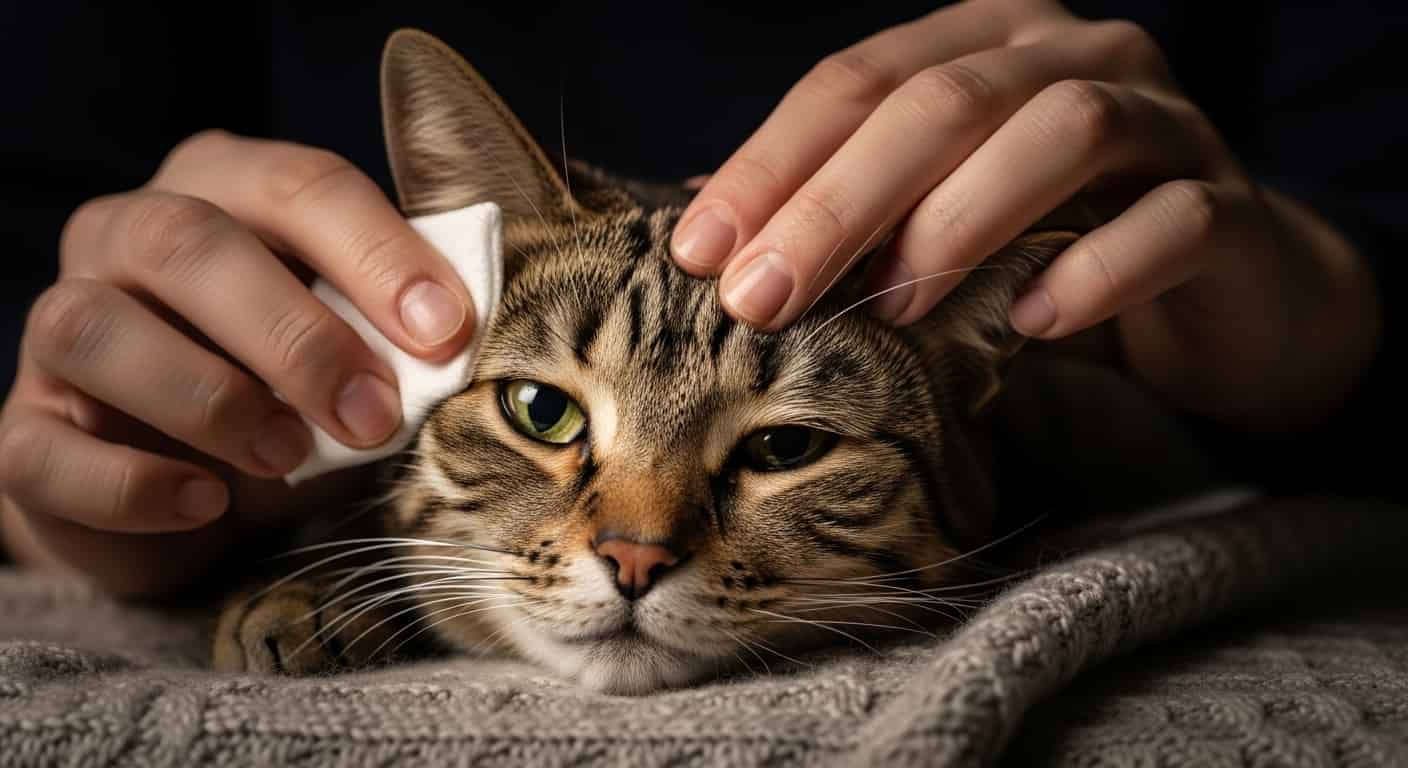
- Help with grooming: Brush gently if your cat enjoys it. Use a damp cloth to clean eyes, mouth, and fur if needed.
- Maintain hygiene: Change bedding often, especially if your cat is incontinent. Use soft, absorbent towels or puppy pads under your cat.
- Monitor pain: Signs of pain include yowling, growling, panting, or restlessness. Talk to your vet about medications or ways to relieve pain at home.
- Keep litter box accessible: If your cat can still walk, put the box close by. Use a shallow box for easier access.
- Temperature support: Use blankets or towels for warmth. Check your cat’s skin for heat or cold and adjust as needed.
- Respect their wishes: Some cats want to be alone; others want you nearby. Follow your cat’s lead.
Tips From Experience
Many owners find that simply sitting quietly, reading aloud, or talking softly can comfort a dying cat. Placing an item with your scent nearby—a shirt or pillowcase—may also soothe them. If your cat enjoys it, gentle purring noises (either your own or from a toy) can provide reassurance.
Natural Death Vs Euthanasia — How To Decide
Choosing between letting a cat die naturally or opting for euthanasia is deeply personal and often emotional. There is no single right answer. Understanding the differences and thinking about your cat’s comfort can help guide you.
What Is Natural Death?
A natural death means allowing your cat to die at home, without medical intervention to speed up the process. Some owners prefer this, wanting their cat to pass in familiar surroundings. However, natural death can be peaceful or difficult, depending on the cat’s condition.
Pros:
- Cat dies in a familiar place, possibly surrounded by loved ones.
- Owner can stay with the cat for as long as needed.
Cons:
- Can involve pain, distress, or breathing struggles.
- May last longer than expected, causing anxiety for both cat and owner.
What Is Euthanasia?
Euthanasia is a humane way to end a cat’s life using medication. It is performed by a veterinarian, usually by injection. The goal is to prevent suffering and provide a peaceful, pain-free end.
Pros:
- Quick and painless for the cat.
- Owner can plan, say goodbye, and be present if desired.
- Prevents prolonged suffering if a cat is in pain.
Cons:
- Decision can be emotionally difficult.
- Some owners feel guilt or doubt afterward.
How To Decide
Ask yourself these questions:
- Is my cat still eating, drinking, and enjoying things?
- Is pain being controlled?
- Are there more bad days than good?
- Is my cat hiding, yowling, or showing distress?
Veterinarians often use a “quality of life scale” to help decide. If your cat is suffering and medical options are exhausted, euthanasia may be the kindest choice. If your cat is peaceful and pain-free, natural death may be possible. Always consult with your vet—they can explain what to expect and help you make the best decision.
For more details, the American Veterinary Medical Association explains euthanasia and end-of-life care for pets.
Credit: cloud9vets.co.uk
What Happens During Cat Euthanasia
If you choose euthanasia, knowing the process can reduce fear and help you prepare.
- Sedation: The veterinarian may give a calming injection so your cat relaxes and feels no pain.
- Euthanasia injection: The main drug, usually a barbiturate, is injected into a vein. It works quickly—within seconds to a minute.
- Loss of consciousness: Your cat becomes unconscious almost immediately, feels no pain, and is not aware of the final moment.
- Breathing and heart stop: After the injection, breathing slows, then stops. The heart stops a few moments later.
You can choose to be present, hold your cat, or say goodbye before or after. Some veterinarians offer home euthanasia, which can be less stressful for both you and your cat.
What To Expect Physically
- Your cat’s eyes may stay open.
- There may be a final breath or small muscle twitch.
- Sometimes, the bladder or bowels empty.
- Your veterinarian will confirm death and give you time with your cat.
This process is gentle and peaceful for most cats.
After Your Cat Dies — What To Expect And What To Do
The moments and days after a cat’s death can be overwhelming. Knowing what to expect helps you handle practical and emotional steps.
What Happens To The Body
After death, your cat’s body will become still. The eyes may remain open, and the body will cool. Rigor mortis (stiffening) begins within 2–6 hours and lasts a day or two. If your cat dies at home, place them on a towel in a quiet, cool place until you can make arrangements.
Options For Aftercare
You have several choices for your cat’s remains:
- Home burial: If local laws allow, you may bury your cat in your yard. Choose a spot away from water sources and dig at least 3 feet deep.
- Cremation: Most veterinarians can arrange cremation. You can choose to receive the ashes (private cremation) or not (communal cremation).
- Pet cemetery: Some owners choose a formal burial in a pet cemetery.
What To Do Right Away
- If your cat dies at home, gently wrap the body in a towel or blanket.
- Keep the body cool (not frozen) if you need time to decide.
- Contact your veterinarian or a pet crematory for next steps.
Telling Other Pets
Other cats or dogs may notice the loss. Let them see and smell the body if they wish. This can help them understand and adjust. Watch for changes in their behavior—they may grieve, too, and need extra attention.
Notifying Family And Friends
Let those close to your cat know. Children may need simple, clear explanations and a chance to say goodbye.
Memorializing Your Cat
Consider ways to remember your cat, such as a photo, paw print, or planting a tree. Some people hold a small ceremony to honor the memory.
Grieving The Loss Of A Cat
Losing a cat can be as painful as losing any family member. Every person grieves differently. It’s normal to feel sadness, anger, guilt, or even relief if your cat suffered. Allow yourself time to mourn.
- Talk to someone: Share your feelings with friends, family, or a support group. Many veterinarians can recommend pet loss counselors.
- Create a memorial: Light a candle, write a letter, or frame a photo. Celebrating your cat’s life can help with healing.
- Give yourself permission: There is no right way or timeline for grief. Some people recover in weeks; others need months.
- Take care of other pets: Remaining pets may show grief. Keep routines as normal as possible and give them comfort.
- Consider support resources: Organizations like the Pet Loss Support Hotline can help if you struggle with grief.
Common Myths And Facts About Grieving
| Myth | Fact |
|---|---|
| “It’s just a cat.” | Cats are family. Grief is real and valid. |
| “Getting a new cat will fix it.” | A new pet cannot replace your lost friend. Wait until you’re ready. |
| “You should be over it by now.” | Everyone grieves at their own pace. There is no deadline. |
Frequently Asked Questions
How Do I Know If My Cat Is Dying Of Old Age Or Just Sick?
If your cat is very old and shows multiple signs like refusing food, hiding, extreme weakness, and labored breathing, death may be near. However, some illnesses can look similar. Only a veterinarian can confirm if a treatable illness is present or if your cat is truly dying of old age.
How Long Does The Dying Process Take For A Cat?
The dying process varies. Some cats decline over weeks or months; others fade rapidly in days or hours. When the final signs appear—such as refusing all food and water, deep weakness, and changes in breathing—death is usually within hours to a few days.
What Is The Best Way To Comfort A Dying Cat?
Give your cat a quiet, soft place, keep them warm, offer gentle touch if wanted, and provide water nearby. Avoid stress or loud noises. Talk to your veterinarian about pain relief if needed. The goal is comfort, not medical intervention.
Should Children Be Present When A Cat Dies?
This depends on the child’s age, maturity, and your family’s beliefs. Some children find comfort in saying goodbye; others may be distressed. Be honest but gentle, and let them decide if they want to be present. Prepare them for what to expect.
Is It Normal To Feel Guilty After Euthanizing A Cat?
Many owners feel guilt, even when euthanasia is the kindest option. Remind yourself that ending suffering is an act of love. Talk to your veterinarian or a pet loss counselor if guilt or grief is overwhelming. You are not alone.
Losing a cat to old age is a deeply emotional experience. By recognizing the signs of decline and knowing what to expect, you can focus on giving your cat the best possible end-of-life care. Whether you choose natural death or euthanasia, remember that your love and attention make all the difference.
Allow yourself to grieve, honor your cat’s memory, and know that you gave your friend a gentle goodbye. If you need support, reach out—help is always available, and you are not alone on this journey.
Credit: shulervetclinic.com
**As an Amazon Associate, I earn from qualifying purchases.**