Up to 90% of cats over the age of 12 live with arthritis. Yet, most cat owners never realize it. Unlike dogs, cats rarely limp or cry in pain. Their signs are subtle—maybe your cat sleeps more, jumps less, or has trouble with the litter box. Arthritis doesn’t just mean “old age”; it’s a painful disease that can steal your cat’s comfort and mobility. The good news? You can help your senior cat feel better, move easier, and enjoy life again. This guide explains how to spot arthritis, what your vet can do, and simple changes you can make at home. With knowledge and care, you can make a real difference for your aging feline friend.
Signs Your Cat Has Arthritis
Arthritis can be hard to spot in cats. They often hide discomfort and adapt quietly. Still, there are telltale signs that your cat may be struggling:
- Reluctance to jump or climb. Cats with arthritis stop jumping onto favorite perches, beds, or counters. You might notice your cat hesitating before leaping, or missing jumps more often.
- Stiffness, especially after resting. Your cat may move stiffly when getting up, or seem “slow” to start moving after a nap.
- Difficulty with stairs. Arthritic cats avoid stairs or move up and down more slowly, sometimes stopping on steps.
- Litter box problems. If your cat starts urinating or defecating outside the box, arthritis could be the reason. High-sided boxes or boxes far from favorite spots become hard to reach.
- Change in grooming habits. Cats with sore joints may stop grooming hard-to-reach areas. You might see matting, greasy fur, or dirty patches, especially along the back or hind legs.
- Personality changes. Your friendly cat may become irritable, withdrawn, or hide more often. Cats may hiss or swat when touched in painful areas.
- Muscle loss and weight changes. Over time, arthritic cats lose muscle mass, especially in the hind legs. Some cats gain weight due to inactivity, while others lose weight if eating becomes difficult.
- Decreased activity. Your cat might sleep more, play less, and generally show less interest in things they used to enjoy.
Two surprising clues often missed by owners: a cat that stops using scratching posts or stops climbing cat trees could be struggling with joint pain. Also, cats sometimes overgroom sore joints, leading to hair loss on elbows or knees.
How Is Arthritis Diagnosed In Cats?
Getting a clear diagnosis is important for proper treatment. Your vet uses a combination of history, observation, and medical imaging.
- History and owner observations. The vet will ask about changes in your cat’s activity, behavior, and mobility. Bring notes or videos of your cat moving at home, as cats often hide pain at the clinic.
- Physical exam. The vet gently feels your cat’s joints, checking for swelling, warmth, or pain. They may test your cat’s range of motion and look for muscle loss.
- X-rays (radiographs). These are the gold standard for confirming arthritis. X-rays show bone spurs, narrowed joint spaces, and changes in bone shape. Mild arthritis may not show up, but moderate to severe cases are usually clear.
- Other tests. Sometimes, blood tests are used to rule out other diseases that mimic arthritis, like nerve problems or infections.
One detail many owners miss: some cats with severe arthritis show little on X-ray, and vice versa. That’s why your vet’s exam and your description of symptoms are just as important as imaging.
Home Adaptations For Arthritic Cats
You can make daily life much easier for your arthritic cat with a few simple changes at home. These changes reduce pain, prevent accidents, and help your cat stay mobile.
Litter Box Access
Arthritic cats often avoid litter boxes that are hard to enter or far away.
- Choose a box with low sides (2–3 inches) for easy entry. Avoid high-sided or covered boxes.
- Keep the litter box on the same floor where your cat spends most time.
- Place the box near sleeping or eating areas to minimize walking.
- Use soft, unscented litter; avoid hard pellets that hurt sensitive paws.
- Clean the box often—cats with arthritis may avoid dirty boxes if using them is painful.
Many owners don’t realize that even a 4-inch step can be a barrier for an arthritic cat. Try a ramp or gentle slope if your box sits in a tray or behind a door.
Ramps And Steps
Cats love high places, but arthritis makes jumping dangerous.
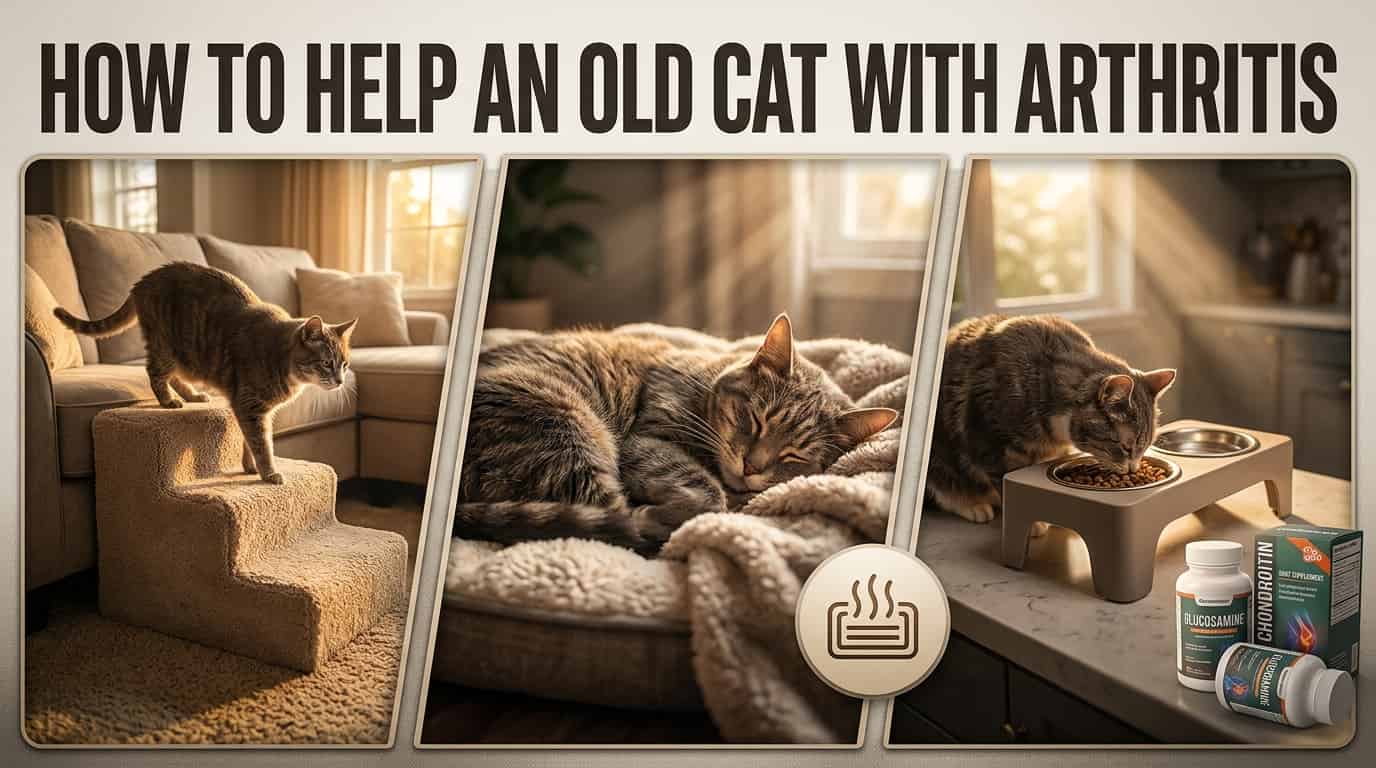
- Add pet ramps or sturdy steps to favorite spots, like beds, sofas, and windowsills.
- Make sure ramps have good traction (carpet or rubber mats). Avoid slippery wood or plastic.
- Keep ramps at a gentle angle. Too steep, and your cat may avoid them.
- Place ramps in areas your cat already likes—forcing a new spot rarely works.
Surprisingly, simple household items like a stack of books or a wide, stable box can work as steps. Just make sure they won’t tip or slide.
Elevated Food And Water Bowls
Neck and shoulder pain can make it hard for cats to eat or drink from the floor.
- Use raised bowls—just 2–4 inches above floor level is enough for most cats.
- Pick wide, stable bowls that won’t tip.
- Place bowls on a non-slip mat to prevent movement.
Elevated bowls aren’t just for big cats. Even small seniors benefit if they have arthritis in the front legs, neck, or spine.
Heated Beds And Warm Spots
Warmth eases stiff joints and helps your cat relax.
- Buy a heated cat bed with a low, safe temperature. Many plug in and use just a few watts.
- Place beds in draft-free, quiet areas where your cat likes to rest.
- You can also use microwavable pet heat pads or heated blankets (always supervise).
- Wash bedding often to keep it clean and inviting.
Many cats seek out warm places, but heating pads designed for humans can be too hot. Choose beds made for pets, and check the temperature with your hand before your cat uses it.
Medical Pain Management Options
Controlling pain is key to improving your cat’s life. Modern medicine offers several options—ask your vet which is right for your cat.
Nsaids (meloxicam)
Non-steroidal anti-inflammatory drugs (NSAIDs) are the main drugs for feline arthritis. Meloxicam is commonly prescribed.
- Meloxicam reduces pain and swelling in joints.
- Available as a liquid, making dosing easy for cats.
- Given daily or as needed, depending on your vet’s advice.
Regular blood tests are needed to monitor kidney and liver function. NSAIDs can cause side effects, especially in cats with kidney disease. Never give human painkillers—they can be deadly.
Gabapentin
Gabapentin is a nerve pain medication often used for chronic pain in cats.
- Helps with both arthritis pain and the anxiety that comes from chronic discomfort.
- Usually given as a capsule or flavored liquid.
- Safe for long-term use, but can cause drowsiness or wobbliness at high doses.
Gabapentin is often used alongside NSAIDs or when NSAIDs aren’t safe. It’s especially helpful for cats that become cranky or aggressive when in pain.
Solensia (new Injection Treatment)
Solensia is a new injectable drug for cats with arthritis, approved in many countries since 2022.
- It’s a monoclonal antibody that blocks a key pain signal (Nerve Growth Factor).
- Given as a monthly injection by your vet.
- Studies show most cats have less pain, improved mobility, and fewer side effects than with NSAIDs.
Solensia is especially useful for cats who can’t take pills or have kidney problems. Not all cats respond, but many owners report dramatic improvement in mood and movement.

Credit: wintersetvet.com
Natural And Supplement Support
Some cats benefit from natural supplements. While not as strong as prescription drugs, these options can help slow joint damage and support overall health.
Joint Supplements (glucosamine, Chondroitin)
Glucosamine and chondroitin are the most common joint supplements for cats.
- They help build and repair cartilage, the tissue that cushions joints.
- Usually given as powders or liquids mixed into food.
- Results are slow—expect 4–8 weeks before seeing improvement.
Choose supplements made for cats. Human or dog products may contain unsafe ingredients or too high a dose.
Research is mixed on how well these work, but many vets recommend trying them, as they’re safe and have few side effects.
Omega-3 Fatty Acids
Omega-3 fatty acids (from fish oil) reduce inflammation throughout the body, including joints.
- Fish oil supplements are available as capsules, liquids, or special foods.
- Look for products with high EPA and DHA content (the most active forms).
- Start with a small dose to avoid digestive upset.
Cats can be picky about fish oil taste. Mix small amounts into favorite foods and increase slowly. Omega-3s also support heart, kidney, and brain health.
Two details many people miss: always use purified fish oil to avoid mercury, and tell your vet if your cat is on blood-thinning medications—omega-3s can increase bleeding risk.
Physiotherapy And Gentle Exercise
Keeping your cat moving is vital for joint health. While cats aren’t usually up for “physical therapy,” gentle activities help maintain muscle, flexibility, and comfort.
- Encourage play with low-impact toys, like wand toys or slow-moving balls.
- Short, frequent sessions are better than one long playtime. Five minutes, two or three times a day, is a good start.
- Massage your cat’s back and legs gently to relax muscles and improve blood flow. Watch for signs of pain or discomfort.
- Range-of-motion exercises can help some cats. Ask your vet or a feline physiotherapist to show you safe techniques.
- Keep nails trimmed. Arthritic cats move less, so nails can grow into pads, causing pain.
A common mistake: forcing a cat to exercise or making them walk up stairs. Always let your cat set the pace—pain leads to more hiding and less movement.
Credit: vets2yourpets.co.uk
Diet Changes For Arthritic Cats
Diet plays a big role in managing arthritis. The right food helps control weight, reduce inflammation, and support joint health.
- Maintain a healthy weight. Overweight cats put extra stress on sore joints. Ask your vet for the ideal weight and how to reach it safely.
- Choose a diet with joint support nutrients. Some commercial foods are made for senior or arthritic cats and include glucosamine, chondroitin, or omega-3s.
- Feed smaller, more frequent meals if your cat is less active.
- Avoid excessive treats or high-calorie snacks.
If your cat is a picky eater, introduce new foods slowly. Mix a little of the new food with the old, increasing the amount over 1–2 weeks.
Here’s a comparison of common nutrients in senior cat foods:
| Brand | Glucosamine (mg/kg) | Omega-3 Fatty Acids (%) | Caloric Density (kcal/cup) |
|---|---|---|---|
| Hill’s j/d | 600 | 1.0 | 348 |
| Royal Canin Mobility | 500 | 0.9 | 320 |
| Purina Pro Plan Senior | 250 | 0.5 | 370 |
Always consult your vet before changing your cat’s food, especially if your cat has kidney or other chronic diseases.
Quality Of Life Assessment
Living with arthritis can be hard, but it’s possible for most cats to enjoy life with the right support. Assess your cat’s quality of life regularly to guide your decisions.
Key areas to monitor:
- Mobility: Can your cat reach favorite spots, the litter box, and food easily?
- Appetite: Is your cat eating and drinking as usual?
- Hygiene: Can your cat groom itself or use the litter box without help?
- Social interaction: Does your cat still seek affection or play, or is it withdrawing?
- Pain control: Is your cat comfortable, or do you see signs of pain (hiding, aggression, vocalizing)?
- Happiness: Does your cat still enjoy favorite activities, or seem depressed?
Some owners find it helpful to keep a daily or weekly diary. Note changes in activity, appetite, and attitude. This makes it easier to see trends and decide if treatments are working.
Here’s a simple quality of life scoring chart:
| Area | Score 0 (Poor) | Score 1 (OK) | Score 2 (Good) |
|---|---|---|---|
| Mobility | Rarely moves, can’t reach key areas | Moves with effort, some trouble | Moves well, minor trouble |
| Appetite | Eats little or nothing | Eats less than normal | Normal appetite |
| Pain | Obvious, frequent pain | Sometimes in pain | Seems comfortable |
A total score of 4–6 suggests your cat is coping well. Scores of 0–2 should prompt a vet review.

Credit: dunedinamc.com
Frequently Asked Questions
How Can I Tell If My Old Cat Is In Pain From Arthritis?
Look for subtle changes: less jumping, stiff walking, avoiding stairs, or not grooming. A cat in pain may hide more, seem grumpy, or stop playing. If you’re unsure, take a video of your cat moving and show your vet.
Is It Safe To Give My Cat Human Painkillers For Arthritis?
Never give human drugs like ibuprofen, acetaminophen, or aspirin. They are toxic to cats and can cause kidney failure or death. Only use medications prescribed by your vet.
Can Arthritis In Cats Be Cured?
There is no cure for arthritis, but it can be managed. With the right treatments, most cats enjoy good comfort and mobility for many years.
Are Supplements Like Glucosamine Really Helpful?
Some cats improve with joint supplements like glucosamine and chondroitin. Benefits are usually mild and slow to appear. Use only products made for cats, and talk to your vet first.
What Is Solensia And How Does It Help Cats?
Solensia is a monthly injection that blocks pain signals in arthritic cats. Studies show many cats move better and act happier with Solensia. It’s especially helpful if your cat can’t take pills or has kidney disease. For more details, see FDA Animal Health Literacy.
Living with an arthritic cat takes patience and care, but it’s rewarding to see your companion comfortable and content again. Small changes at home, regular vet visits, and the right treatments can make a dramatic difference. Watch your cat closely, trust your instincts, and work with your vet to find the best plan.
Your senior cat still has plenty of good days ahead—with your help, those days can be pain-free and full of love.
**As an Amazon Associate, I earn from qualifying purchases.**