A tiny kitten’s first months are full of rapid growth, learning, and big changes. One of the most important things you can do for your kitten’s health is to give the right food at the right times. A proper kitten feeding schedule is not just about keeping your pet full—it’s about supporting strong bones, healthy organs, and a happy, playful personality. Kittens who eat on a set schedule often have fewer health problems, grow at a healthy pace, and develop good eating habits for life. Routines also help you notice if your kitten isn’t eating well, which can be a sign of illness.
Many new kitten owners are surprised by how much and how often a kitten needs to eat. Their tiny stomachs can’t hold much, but their bodies need lots of energy for play and development. At the same time, overfeeding can be harmful too.
This article will guide you through every stage of kitten feeding, from newborn to young adult, with clear schedules, portion advice, and expert tips for each age.
Kitten Feeding Schedule Chart
The best way to keep track of your kitten’s meals is with a simple chart. Here’s an easy guide to how often and how much to feed your kitten as they grow:
| Kitten Age | Meals per Day | Portion Size per Meal | Type of Food |
|---|---|---|---|
| 0–4 weeks | Every 2–3 hours | 5–10 ml formula | Kitten milk replacer |
| 4–8 weeks | 4–5 times | 1–2 tablespoons | Formula + wet food |
| 8–16 weeks | 3–4 times | 2–4 tablespoons | Wet or dry kitten food |
| 4–6 months | 2–3 times | ¼ cup | Kitten food |
| 6–12 months | 2 times | ¼–½ cup | Kitten or young adult food |
Remember, portion sizes can vary by brand and kitten size. Always check your kitten food packaging for specific guidance and adjust as your vet recommends.
4–8 Weeks — Newborn To Weaning
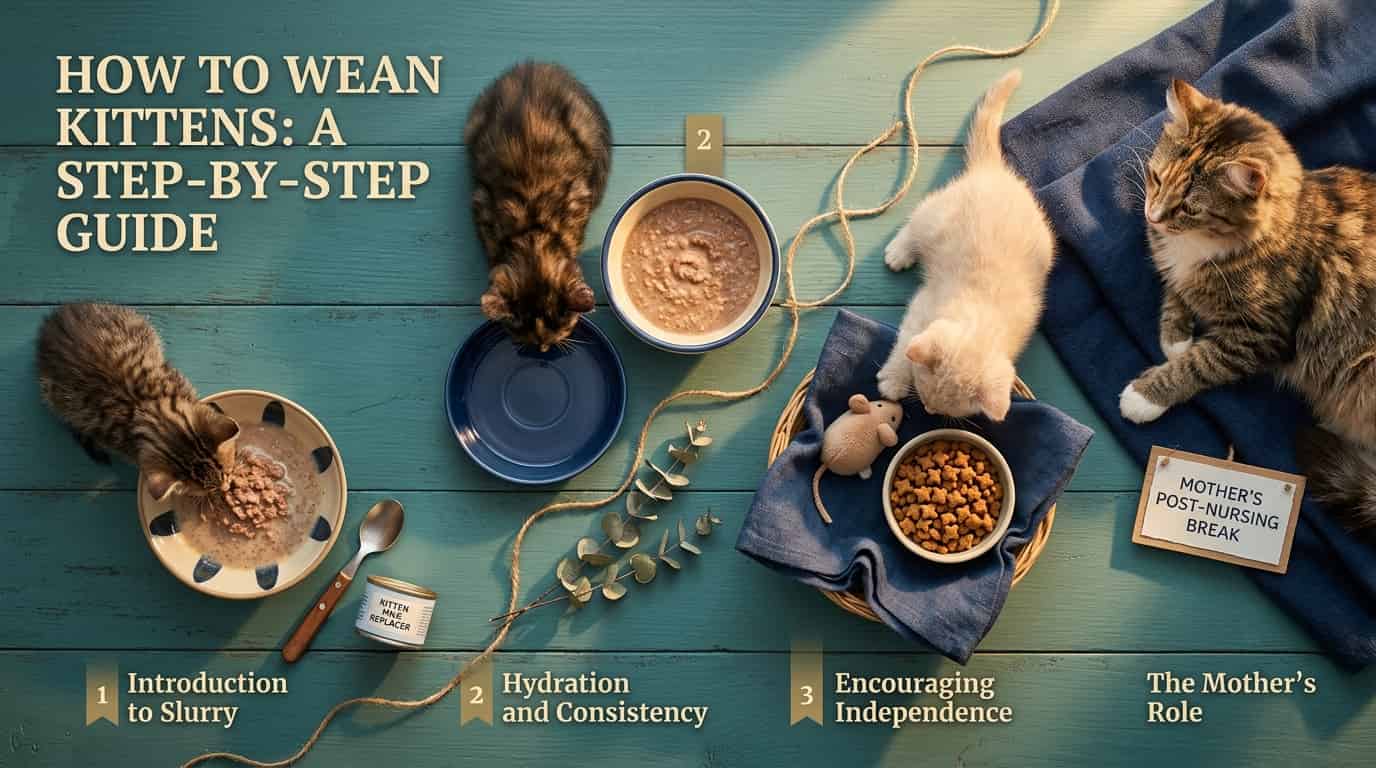
This is a big transition time for kittens. In the first four weeks, most kittens rely entirely on mother’s milk or a kitten milk replacer if the mother is not present. By the fourth week, kittens begin to show interest in solid food, and you can start the weaning process.
Feeding tips for 0–4 weeks:
- Kittens nurse or get bottle-fed every 2–3 hours, including at night.
- Use only a kitten milk replacer (never cow’s milk).
- Keep formula warm (about body temperature).
Weaning (4–8 weeks):
- At around 4 weeks, offer a shallow dish of formula mixed with wet kitten food to make a soft gruel.
- Feed 4–5 times a day, gradually increasing the amount of solid food and decreasing formula.
- By 8 weeks, most kittens should eat mainly wet food, with water always available.
Common mistake: Switching to solid food too quickly can cause stomach upset. Move slowly, and watch for diarrhea or refusal to eat.
Non-obvious tip: Kittens at this age may not recognize water as a drink. Wet food provides most of their moisture, but always offer a small bowl of clean water.
8–16 Weeks — Three To Four Meals A Day
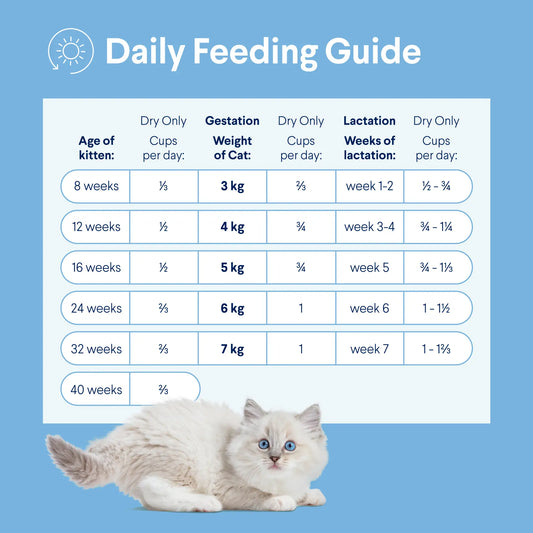
At two months, your kitten is playful, curious, and growing fast. They need more food, split into several meals to avoid upset stomachs and to match their small stomach capacity.
- Offer 3–4 meals daily. For working owners, breakfast, lunch, afternoon, and evening work well.
- Use high-quality kitten food, either wet or dry. Wet food helps with hydration, but dry food is fine if your kitten drinks enough water.
- Each meal should be about 2–4 tablespoons, depending on your kitten’s size and activity.
Practical tip: Use a measuring spoon or small scale. Over-guessing portions is easy and can lead to overfeeding.
Example day:
- 7: 00 AM – Wet food, 2 tbsp
- 12: 00 PM – Wet or dry food, 2 tbsp
- 5: 00 PM – Wet food, 2 tbsp
- 10: 00 PM – Wet or dry food, 2 tbsp
If your kitten skips a meal but is otherwise playful, don’t worry. If they skip multiple meals or seem tired, contact your vet.
4–6 Months — Twice To Three Times A Day
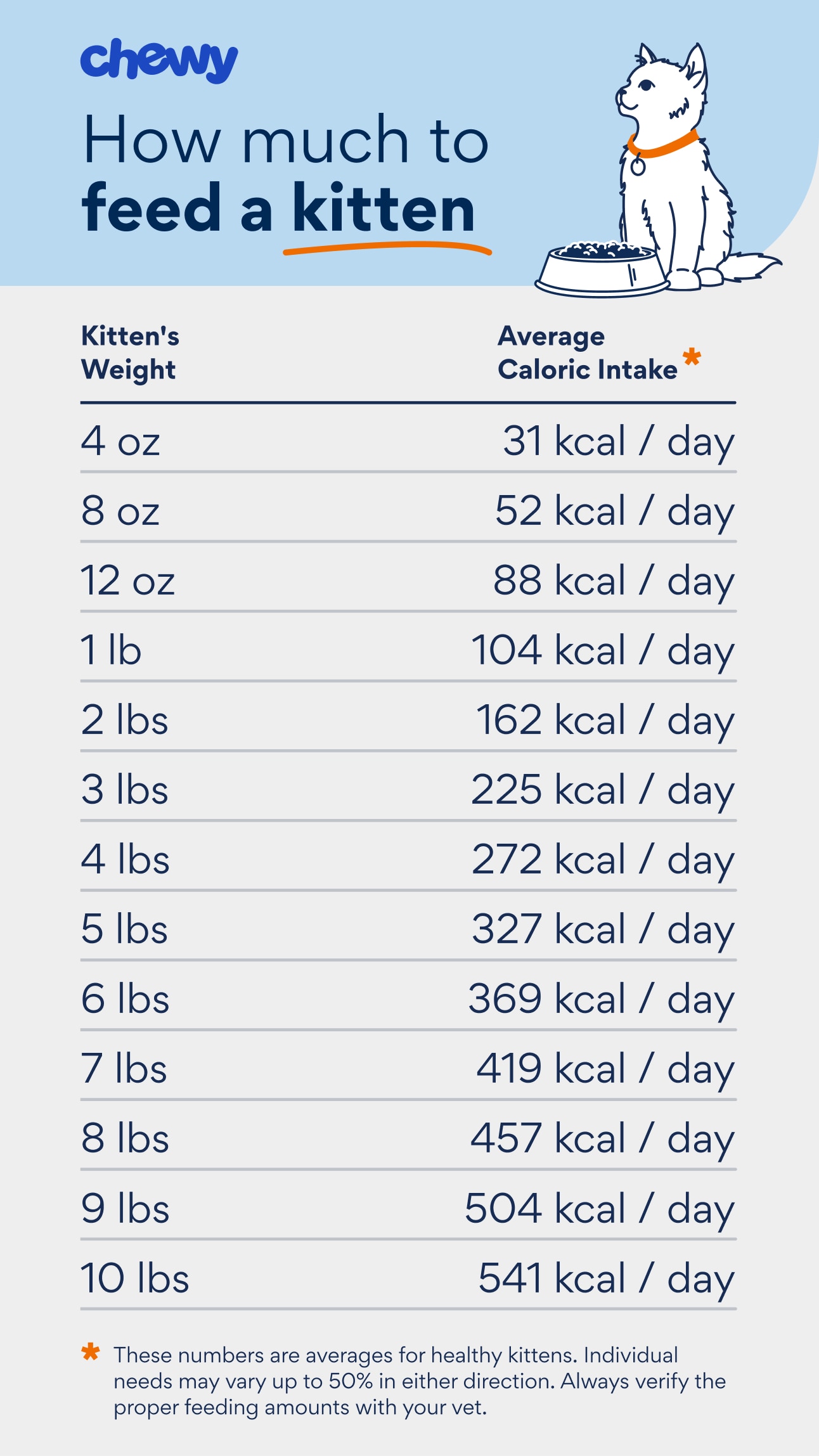
As your kitten’s body gets bigger, their meals get larger, but they need them less often. This is a time of continued fast growth, but their digestive system can now handle more food per meal.
- Feed 2–3 meals per day. Most kittens do well with breakfast and dinner, plus a small lunch if you’re home.
- Each meal: About ¼ cup of food, but check the brand’s recommendations.
- You can start mixing in a little adult food if your vet says your kitten is ready, but most should stay on kitten food until at least 12 months.
Non-obvious insight: Kittens at this age may start to beg or overeat if food is always available. Stick to measured portions to prevent weight problems.
Credit: www.chewy.com
6–12 Months — Transitioning To Twice Daily
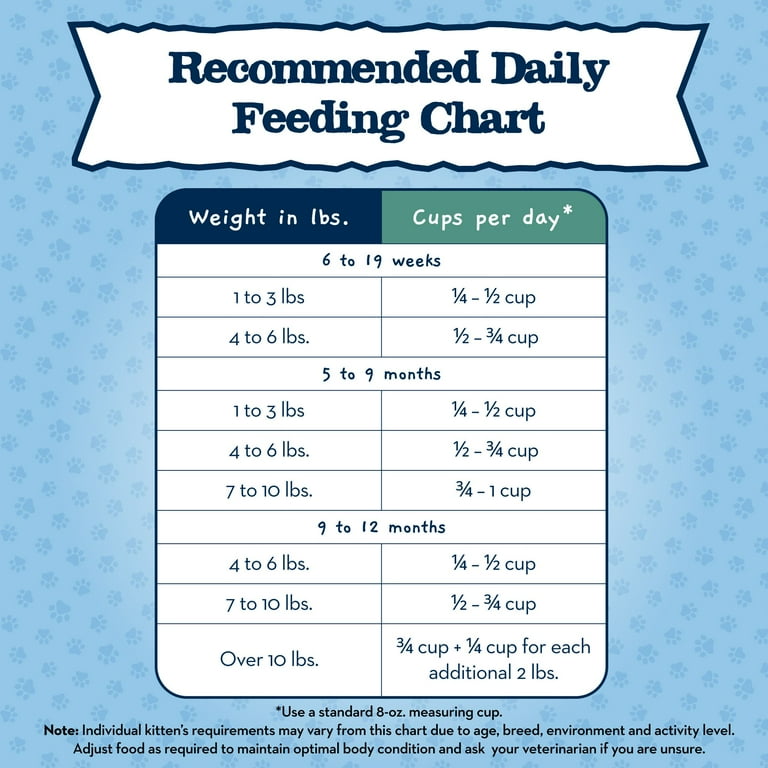
Your kitten is almost an adult and can eat larger meals less often. This is also the stage when many vets recommend slowly shifting from kitten to adult food, but only if your kitten is ready and not underweight.
- 2 meals a day is normal now (morning and evening).
- Portion size: ¼–½ cup of food per meal, depending on weight and activity.
- If your kitten is spayed or neutered, their calorie needs may go down, so monitor their body shape.
Transitioning tips:
- Switch to adult food gradually over 7–10 days by mixing it with kitten food.
- Watch for digestive upset or refusal to eat, and slow down the change if needed.
Data table: Wet vs dry food for older kittens
| Food Type | Benefits | Drawbacks |
|---|---|---|
| Wet food | Hydration, easier chewing, palatable | More expensive, spoils quickly |
| Dry food | Convenient, less messy, helps teeth | Low moisture, easier to overfeed |
Free Feeding Vs Scheduled Meals — Which Is Better?
Some owners leave food out all day (free feeding), while others serve measured meals at set times. For kittens, scheduled meals are almost always better.
Why scheduled meals work best:
- You can monitor how much your kitten eats.
- It prevents overeating and obesity.
- Helps spot illness early (a sick kitten may skip meals).
- Builds a routine, which lowers stress.
When free feeding may be okay:
- Only with dry food (wet food spoils).
- In multi-kitten homes where everyone is healthy and slim.
- For very young kittens (under 8 weeks) who need frequent meals.
Risks of free feeding:
- High risk of overweight kittens.
- Hard to notice early signs of illness.
- Food can go stale or attract pests.
Expert tip: If you must free feed, use a measured amount each day—don’t refill the bowl if it empties early.
Credit: streetphotographersfoundation.com
Signs Your Kitten Is Eating Enough
Worried if your kitten is getting the right amount? Healthy kittens show clear signs of proper feeding:
- Steady weight gain: Kittens should gain about 10–15 grams per day.
- Bright eyes and clean fur: Good nutrition shows in their coat and energy.
- Active and playful: Lively behavior means enough calories.
- Regular bowel movements: Stools should be firm and brown, not loose or hard.
How to check: Weigh your kitten weekly on a kitchen scale. Keep a simple chart:
| Week | Kitten Weight (grams) | Notes |
|---|---|---|
| 8 | 800 | Active, playful |
| 9 | 870 | Normal appetite |
| 10 | 940 | Energetic |
If your kitten’s weight stays the same or drops for more than a week, contact your vet.
Signs Of Overfeeding
It’s easy to give in to a begging kitten, but too much food can be just as risky as too little. Look for these warning signs:
- Rapid weight gain: Kittens should grow, but not get chubby fast.
- Round, bloated belly: Especially after meals—can signal too much food or worms.
- Soft or greasy stools: Overfeeding can cause digestive upset.
- Less interest in play: Overweight kittens may be less active.
- Visible fat pads: Look for bulges over the ribs or at the base of the tail.
How to avoid: Stick to measured portions. If your kitten seems hungry, check with your vet before increasing food.
Hidden risk: Overfed kittens can develop joint problems and diabetes later in life. It’s better to feed a little less than too much.
Credit: www.miach.co
Frequently Asked Questions
How Do I Choose The Best Kitten Food?
Look for food labeled “complete and balanced for kittens” by trusted brands. Wet or dry is fine, but small kittens may prefer wet food for easy chewing. Avoid foods with added sugars or artificial colors.
Can I Give Cow’s Milk To My Kitten?
No. Cow’s milk can cause diarrhea and stomach upset. Only use a special kitten milk replacer if the mother is not available.
My Kitten Is Not Finishing Meals. Should I Worry?
If your kitten skips one meal but is playful and alert, it’s usually okay. If they skip more than one meal, or seem tired, see your vet. Illness can cause loss of appetite.
When Can I Switch My Kitten To Adult Food?
Most kittens are ready for adult food at 12 months. Some large breeds need kitten food longer. Switch slowly over 7–10 days to avoid stomach upset.
How Much Water Does My Kitten Need?
Kittens need fresh water available at all times. Wet food provides some moisture, but always keep a clean bowl of water.
For more detailed advice, you can visit ASPCA Cat Nutrition Tips.
A good feeding routine is one of the best gifts you can give your kitten. Not only does it help them grow strong and healthy, but it also sets the stage for a happy adult cat. Every kitten is a little different, so adjust these guidelines as needed and work with your vet if you have questions.
Download or print our feeding chart and keep it on your fridge—it’s a simple way to stay on track and give your kitten the best start in life.
**As an Amazon Associate, I earn from qualifying purchases.**