Up to 50% of cats over the age of 15 begin to show signs of cognitive decline. These changes can be subtle at first—maybe your cat seems lost in familiar rooms or forgets long-learned routines. Over time, however, the symptoms may become more obvious and affect daily life for both you and your pet. Many owners mistake these changes for “just getting old,” but there’s a specific condition behind them: feline cognitive dysfunction syndrome (CDS). Understanding what CDS looks like, how it’s diagnosed, and what you can do to help is essential for giving your older cat the best quality of life.
What Is Feline Cognitive Dysfunction Syndrome (cds)?
Feline cognitive dysfunction syndrome is a brain disorder, similar to Alzheimer’s disease in people. As cats age, their brains can develop changes in nerve cells, neurotransmitters, and blood flow. These changes affect how they think, remember, and interact with their environment. CDS usually appears in cats older than 10 years, but it becomes much more common as cats reach 15 and beyond.
Studies show that up to 28% of cats aged 11-14 and nearly 50% of cats aged 15 and older show at least one sign of cognitive decline. These symptoms are not just “normal aging”—they indicate a medical problem that can be managed and sometimes improved.
Disha — The 5 Signs Of Cognitive Dysfunction In Cats
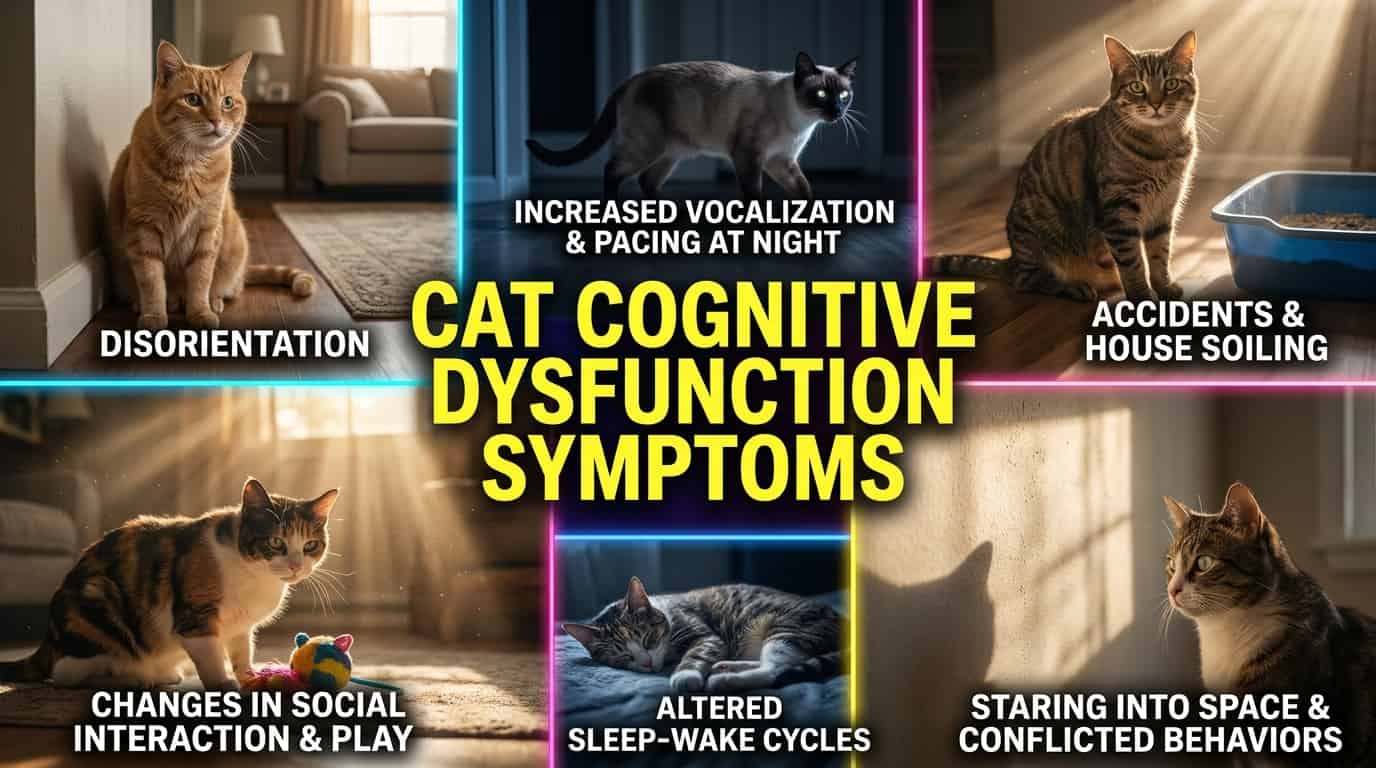
Veterinarians use the acronym DISHA to describe the five main categories of cognitive dysfunction symptoms in cats. Each letter stands for a different area where changes may be seen. Understanding these signs is the first step in getting your cat the help they need.
Disorientation
Cats with CDS often become confused in places they used to know well. They may wander aimlessly, get “stuck” behind furniture, or seem unsure how to navigate the house. For example, a cat might stare at a wall or get lost on the way to the litter box.
Some cats appear to forget where their food or water bowls are, even if they haven’t moved.
Disorientation can also look like:
- Staring into space for long periods
- Not recognizing family members or other pets
- Getting trapped in corners or open spaces
Non-obvious insight: Sometimes, owners only notice this confusion at night, when the house is quieter and the cat seems more restless. This is called “sundowning,” and it’s a common feature of cognitive decline in both humans and animals.
Altered Interactions
A cat’s social behavior can change as cognitive dysfunction progresses. Some cats become more withdrawn and avoid people, while others may become more clingy or vocal. You might notice your cat hissing at you or other pets for no clear reason, or not responding to petting like they used to.
Altered interactions might include:
- Increased irritability
- Loss of interest in play or affection
- Sudden aggression or fearfulness
- Following owners around the house constantly
Non-obvious insight: These changes are not always consistent—your cat might be affectionate one moment and distant the next. This unpredictability is a strong clue that something medical, not just emotional, is going on.
Sleep-wake Cycle Changes
Many cats with CDS experience sleep disturbances. They may sleep more during the day and become restless or vocal at night. Owners often notice their cat yowling, pacing, or wandering the house when everyone else is trying to sleep.
Common sleep-wake cycle changes include:
- Staying awake or meowing at night
- Sleeping in unusual places
- Napping more during the day but less at night
- Waking up family members with loud vocalization
Non-obvious insight: Not all nighttime vocalization is due to CDS—sometimes, cats yowl from pain (like arthritis) or vision loss. But if other symptoms of DISHA are also present, CDS is more likely.
House Soiling
A cat who forgets how to use the litter box may be showing signs of cognitive dysfunction. This is often one of the first symptoms owners notice, especially in cats who have always used the box reliably. House soiling can be distressing, but it’s important to remember that your cat isn’t being “bad”—they may simply forget where the box is or how to use it.
Signs of house soiling:
- Urinating or defecating outside the litter box
- Using new, unusual places for elimination (like sinks or bathtubs)
- Going near the box but not inside it
Non-obvious insight: Sometimes, house soiling happens because the cat forgets how to get to the box, or because pain makes it hard to climb in. Always rule out other causes before assuming CDS is to blame.
Activity And Appetite Changes
Cats with CDS may show shifts in how active they are. Some become restless, pacing from room to room, while others become less interested in moving at all. Appetite can also change—some cats forget to eat, while others may seem hungry all the time.
Changes in activity and appetite may include:
- Wandering aimlessly
- Lack of interest in toys or hunting games
- Forgetting mealtimes or eating less
- Begging for food more often, even after eating
Non-obvious insight: Sudden changes in activity or appetite can also signal other illnesses, so a visit to the vet is always wise if you notice these symptoms.
Here’s a quick comparison of the five DISHA signs and what they might look like:
| DISHA Sign | Typical Behaviors | When to Worry |
|---|---|---|
| Disorientation | Staring at walls, getting lost | Frequently or suddenly appears confused |
| Altered interactions | More clingy or withdrawn | Noticeable change in social habits |
| Sleep-wake changes | Nighttime yowling, day sleeping | Regular disruption of household sleep |
| House soiling | Missing the litter box | New accidents in a previously reliable cat |
| Activity/appetite | Restlessness or apathy, food changes | Sudden loss or increase in appetite/activity |
How Is Cds Diagnosed?
There is no single test for feline cognitive dysfunction syndrome. Diagnosis is based on symptoms, medical history, and ruling out other causes. Your veterinarian will start with a detailed discussion of your cat’s behavior, including when changes began and how they have progressed.
Steps in diagnosing CDS usually include:
- Detailed history: When did the symptoms start? Which DISHA signs are present?
- Physical exam: Checking for signs of pain, arthritis, or other problems.
- Blood and urine tests: To rule out conditions like kidney disease, diabetes, or hyperthyroidism.
- Imaging (sometimes): X-rays or ultrasounds if another illness is suspected.
A cat is diagnosed with CDS when other possible medical causes for behavioral changes have been excluded and the symptoms match DISHA criteria.
Conditions That Mimic Cds — Ruling Out Other Causes
Many illnesses can cause symptoms similar to CDS, especially in older cats. For example, a cat with hyperthyroidism may become restless and vocal, while kidney disease can cause house soiling. Before diagnosing cognitive dysfunction, your vet will check for these common “copycat” conditions:
- Arthritis (pain making movement difficult)
- Diabetes (increased thirst and urination)
- Kidney disease (more accidents outside the box)
- Hypertension (high blood pressure causing confusion or blindness)
- Hearing or vision loss (leading to disorientation)
- Brain tumors (rare, but possible in elderly cats)
Here’s a helpful comparison of CDS and two other conditions with similar symptoms:
| Condition | Disorientation | House Soiling | Other Clues |
|---|---|---|---|
| CDS | Common | Common | Sleep changes, altered social behavior |
| Kidney Disease | Sometimes | Very common | Increased drinking, weight loss |
| Arthritis | Rare | Common (can’t access box) | Stiff movement, reluctance to jump |
Non-obvious insight: Even if your cat is diagnosed with CDS, it’s possible for them to have another medical condition at the same time. Always report any new symptoms to your vet, even after diagnosis.

Credit: www.aspcapetinsurance.com
Treatment And Management Options
Cognitive dysfunction cannot be cured, but its symptoms can often be managed. The goal is to slow the progression, reduce stress, and keep your cat comfortable and happy.
Environmental Enrichment
Stimulating your cat’s brain is key. This means providing new toys, safe outdoor views, and regular play sessions. Puzzle feeders or treat-dispensing toys encourage mental activity. Even simple changes, like rotating your cat’s toys or placing perches near windows, can help.
- Give your cat a variety of textures and smells
- Use gentle, interactive play (fishing rod toys, feather wands)
- Offer safe climbing structures or scratching posts
Non-obvious insight: Introducing too many changes at once can be stressful. Make adjustments slowly and watch how your cat responds.
Diet And Antioxidants
Some special diets contain antioxidants and nutrients shown to support brain health. Diets rich in omega-3 fatty acids (DHA/EPA), vitamin E, and B vitamins may help slow cognitive decline.
- Talk to your vet about prescription “brain health” diets
- Add safe supplements only under veterinary advice
A study published in the Journal of Feline Medicine and Surgery found that cats fed diets with antioxidants and fish oil had improved cognitive scores compared to those on regular diets.
Selegiline (anipryl)
Selegiline is a medication approved for cognitive dysfunction in dogs, but it is sometimes used “off-label” for cats. It works by increasing levels of dopamine, a chemical messenger in the brain. While not all cats respond, some show improvement in disorientation and social interaction.
- Selegiline can have side effects (restlessness, stomach upset)
- Never give medications without veterinary supervision
Non-obvious insight: Dose and response can vary widely between cats. If your cat does not improve after a few weeks, your vet may suggest stopping the medication.
Routine And Predictability
Cats with CDS cope best in predictable environments. Keep food, water, and litter boxes in the same places. Stick to regular feeding and play times. Avoid moving furniture or making big changes in their surroundings.
- Use nightlights to help them navigate in the dark
- Limit loud noises and disruptions
Here’s a quick summary of management options and their benefits:
| Management Option | Main Benefit | Possible Drawback |
|---|---|---|
| Environmental enrichment | Mental stimulation | Too many changes can cause stress |
| Diet/antioxidants | Supports brain health | May take weeks to see effects |
| Selegiline | Possible symptom improvement | Not all cats respond; side effects possible |
| Routine | Reduces anxiety | Requires owner consistency |
How To Support A Cat With Cognitive Dysfunction At Home
Caring for a cat with CDS requires patience and understanding. Here are some practical ways to make life easier for both of you:
- Keep essentials accessible: Place litter boxes, food, and water on every floor of your home.
- Use soft lighting at night: Nightlights can help a confused cat find their way.
- Minimize stress: Avoid introducing new pets or moving house if possible.
- Groom gently: Older cats may neglect grooming; help with a soft brush.
- Stay calm: If your cat has an accident or seems lost, respond with patience, not punishment.
Non-obvious insight: Set up a “safe room” with bedding, food, and a litter box for times when your cat seems extra anxious. This gives them a secure space to retreat.
Credit: cats.com
How Quickly Does Cds Progress?
Cognitive dysfunction tends to progress slowly, but the speed can vary. Some cats show mild symptoms for years, while others decline within months. Early signs (like occasional confusion) often appear first, followed by more serious problems (such as house soiling or severe disorientation).
Progression can be influenced by:
- The cat’s age at symptom onset
- Overall health and other medical conditions
- How quickly management strategies are started
If you notice any changes, prompt veterinary care and home modifications can help slow the decline and improve your cat’s quality of life.
Frequently Asked Questions
What Age Do Most Cats Show Signs Of Cognitive Dysfunction?
Most cats show signs after age 10, but the risk rises sharply after 15. By this age, up to 50% of cats have at least one symptom of CDS.
Is Feline Cognitive Dysfunction The Same As Dementia?
Yes, feline cognitive dysfunction is similar to dementia or Alzheimer’s disease in people. Both involve changes in the brain that affect memory, behavior, and daily function.
Can Young Cats Get Cognitive Dysfunction?
It is extremely rare for cats under 10 years old to develop CDS. If a young cat shows symptoms, another medical cause is much more likely.
Are There Any Breeds More At Risk For Cds?
There is no clear evidence that certain breeds are more at risk. However, cats living longer lives due to good care are more likely to develop age-related conditions like CDS.
Where Can I Learn More About Cds In Cats?
For more in-depth scientific information, visit the Wikipedia page on Feline Cognitive Dysfunction.
Aging is part of every cat’s life, but cognitive dysfunction syndrome doesn’t have to mean the end of a happy home. By learning the signs of CDS, working closely with your veterinarian, and making thoughtful changes to your cat’s routine and environment, you can help your senior cat stay comfortable and engaged. Pay attention to subtle changes, act early, and always approach your aging companion with patience and compassion—they depend on you, especially when the world feels a little more confusing.

Credit: animalwellnessmagazine.com
**As an Amazon Associate, I earn from qualifying purchases.**