The Pallas cat and domestic cat share a similar weight and body length, but they differ completely in coat, vocalization, and temperament. The wild manul features the densest fur of any feline, rounded pupils, and a stocky frame built for cold mountain steppes, unlike house cats.
- Pallas cats weigh between 2.5 and 4.5 kg, matching standard house cats.
- Extremely thick fur creates a visual illusion of a much larger animal.
- Manuls emit barks and chirps instead of the typical domestic meow.
- Genetic divergence means these wild cats cannot breed with house cats.
- Pallas cats remain strict wild animals unsuited for home life.
You might see a viral photo of a grumpy wild cat online and wonder how it stacks up against your couch napping pet. The Pallas cat, or Otocolobus manul, grabs attention with its meme-famous facial expression. People often assume this Central Asian native is a giant beast. Reality tells a different story. Let us examine the actual physical traits, vocal habits, and behavioral differences between the wild manul and the familiar Felis catus.
How Do Pallas Cats and Domestic Cats Compare in Size and Weight?
Pallas cats and domestic cats share nearly identical body dimensions. A full-grown manul typically weighs from 2.5 to 4.5 kg. Standard house cats fall into a very similar range of 3.6 to 4.5 kg. Body length for both species stays close to 50 to 65 centimeters, excluding the tail.
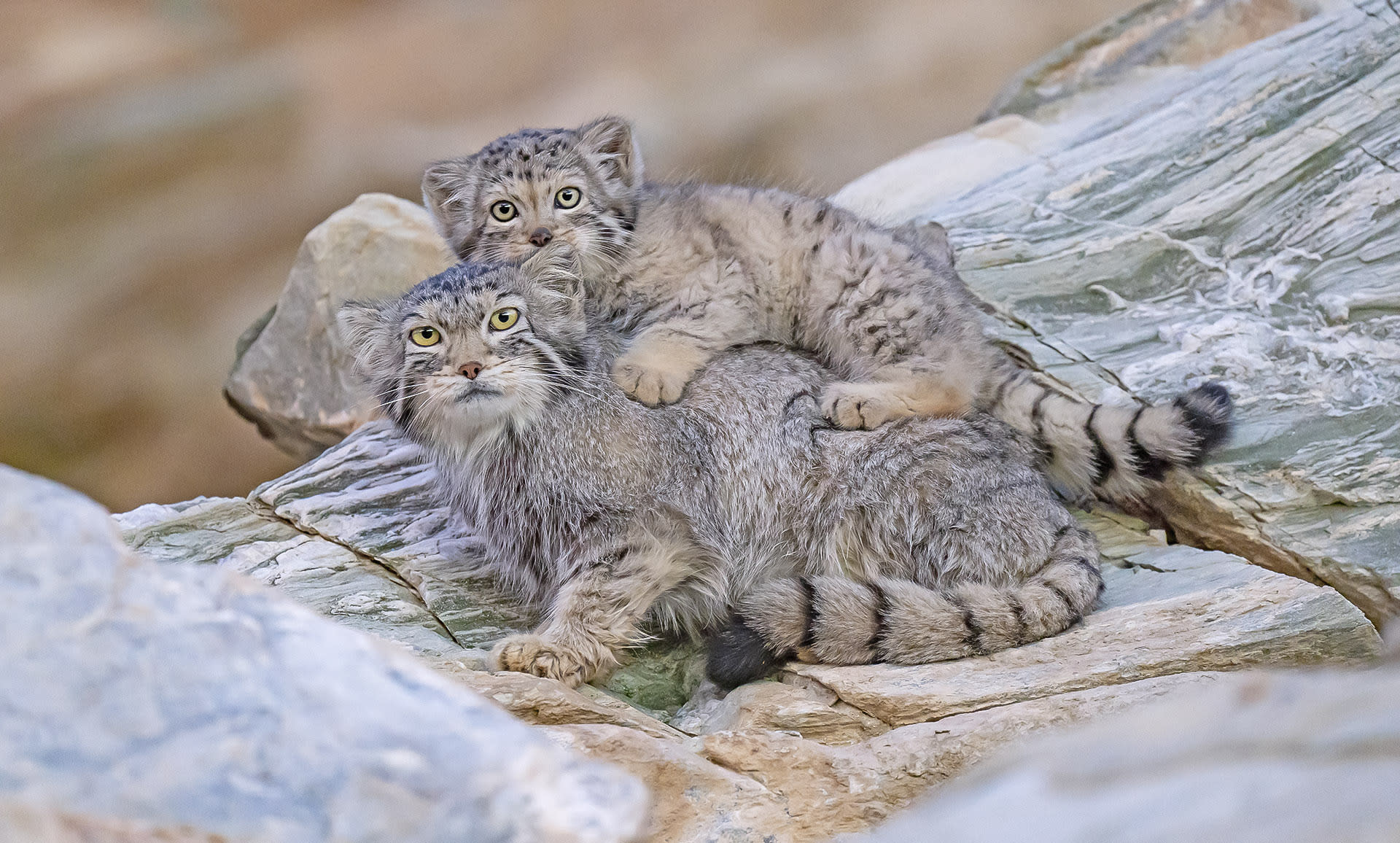
The confusion over size stems entirely from appearance. Manuls possess the densest fur in the feline world. Long guard hairs with white tips trap air to shield the animal from sub-zero temperatures on rocky steppes. Short legs and a low-slung, stocky skeletal structure add to this bulky silhouette. Strip away that thick winter coat, and you find a surprisingly small, lithe predator underneath.
Skeletal structure and body proportions
Bone structure separates the wild manul from modern house cats. Pallas cats feature shorter limbs relative to their body mass. Their skulls also display a flattened top profile with ears set very low on the sides. This head shape helps them peer over rocks while hiding from prey. Domestic cats feature higher-set ears and more rounded cranial structures.
The impact of resident fur density
Winter coats on manuls grow exceptionally thick to handle harsh high-altitude winters. Guard hairs reach lengths of up to seven centimeters on the belly and flanks. This heavy insulation alters the animal’s visual volume. Observers often guess the weight at double the actual number.
| Feature | Pallas Cat (Otocolobus manul) | Domestic Cat (Felis catus) |
|---|---|---|
| Average Weight | 2.5 to 4.5 kg (5.5 to 10 lbs) | 3.6 to 4.5 kg (8 to 10 lbs) |
| Coat Type | World’s densest and longest feline fur | Varies by breed (short to long) |
| Vocalization | Barks, growls, high-pitched chirps (no meowing) | Meows, purrs, trills, yowls |
| Pupil Shape | Round pupils even in bright light | Vertical slit pupils |
| Domestication | Wild animal, non-domesticated | Fully domesticated companion species |
| Habitat | Rocky steppes and high-altitude grasslands of Central Asia | Human households globally |
Can a Pallas Cat Meow Like a Domestic Cat?
Pallas cats do not meow like house cats. Vocalizations from a manul include sharp barks, low growls, and high-pitched chattering chirps. These sounds project across wide open valleys rather than enclosed rooms.
Wild felines in high-altitude environments evolved distinct communication tools. A house cat uses a soft meow primarily for human interaction. Manuls live solitary lives across vast ranges. They rely on sharp vocal bursts to signal territory boundaries or find mates across rocky terrain. Their calls often sound more like a small dog or an owl than a traditional cat.
Understanding the Pallas cat bark
Field researchers note that the manul bark sounds surprisingly loud for such a compact animal. Males emit a harsh, structural call during the breeding season. Captive individuals occasionally make a soft purr-like sound, but the classic domestic meow remains absent from their vocabulary.
Comparison of communication sounds
House cats master a wide spectrum of sounds. They purr when content, yowl during disputes, and chirp at birds. Manuls keep their vocal output minimal. Silence protects them from larger predators sharing their range, such as foxes and raptors.

What Is the Difference in Temperament and Personality?
Pallas cats remain completely wild predators with no history of domestication. House cats adapted to live alongside human communities over thousands of years. Manuls retain fierce, solitary instincts that resist human taming.
The famous grumpy facial expression comes from bone geometry, not attitude. Low ears and flattened brows create a permanent scowl. Beneath that face lies a hyper-vigilant hunter adapted to harsh environments. They hunt pikas, rodents, and birds by stalking through rocky terrain. They view close human presence as a threat rather than a source of affection.
Predatory instincts and survival tactics
Wild manuls rely on camouflage and freezing in place to escape notice. When cornered, they stand their ground and hiss fiercely. Domestic cats run, hide, or seek human comfort when startled. The wild survival drive makes socialization impossible.
Why socialization with humans fails
Kittens raised by humans retain their wild behavioral triggers. Maturity brings intense defensive aggression. Captive facilities house manuls in secure enclosures with minimal direct handling for animal safety and keeper protection.
Could a Pallas Cat Breed with a Domestic Cat?
A Pallas cat cannot successfully breed with a domestic cat. Wide genetic divergence separates the Otocolobus genus from the Felis genus. No verified hybrid offspring exist between these two distinct branches of the feline family tree.
Internet rumors occasionally claim wild cat hybrids are common. Genetic barriers prevent fertilization between species separated by millions of years of evolution. Attempts to cross wild and domestic species outside of closely related lines fail due to chromosome mismatches.
Genetic distance between Otocolobus and Felis
Taxonomists place the manul in its own monotypic genus, Otocolobus. House cats belong to Felis catus. This separation reflects deep evolutionary divergence. Their genetic paths split long before human civilization began.
Health and disease transmission risks
Mixing wild and domestic populations creates severe veterinary dangers. A 2024 study from College of Veterinary Medicine researchers found the first genetic evidence of feline coronavirus transmission between domestic and wild cats. Exposing wild populations to domestic pathogens threatens fragile conservation efforts.
Can You Keep a Pallas Cat as a Pet?
You cannot legally or ethically keep a Pallas cat as a pet. Strict international wildlife laws protect the species across its natural habitat in Central Asia. Keeping one violates conservation acts and animal welfare standards.
Specialized dietary needs make home care impossible. Manuls eat whole prey to digest bones and fur essential for their gut health. Domestic cat food causes severe nutritional deficiencies. Furthermore, captive manuls lack immunity to common domestic feline diseases. They suffer high mortality rates in unmanaged environments due to toxoplasmosis and respiratory infections.
Legal status and protection
Governments across their range classify manuls as protected wildlife. Trade in wild pelts or live specimens violates international treaties like CITES. Permits remain restricted to accredited zoos and conservation breeding programs.
Specialized husbandry requirements
Zoos housing Pallas cats build expansive outdoor enclosures with rocky outcrops mimicking high-altitude steppes. Humidity control proves vital because damp air triggers fatal lung infections. Maintaining these animals requires expert veterinary staff and strict quarantine protocols.
Frequently Asked Questions
Could a Pallas cat breed with a domestic cat?
No, a Pallas cat cannot breed with a domestic cat. Genetic divergence between the Otocolobus and Felis genera prevents successful hybridization. Chromosome mismatches block reproduction entirely, keeping the species completely separate.
How big is a Pallas cat compared to a domestic cat?
A Pallas cat matches the weight and length of an average domestic cat, typically measuring 2.5 to 4.5 kg. However, extremely dense fur and stocky limbs make the wild manul look much larger and heavier than a house cat.
Can I have a Pallas’s cat as a pet?
No, you cannot keep a Pallas cat as a pet. They are wild, protected animals requiring specialized diets of whole prey and specific climate controls. Keeping them violates international wildlife laws and threatens their fragile health.
Can a Pallas cat meow?
No, Pallas cats do not meow like domestic cats. They communicate through sharp barks, low growls, and high-pitched chirps designed to carry across wide open mountain ranges and rocky steppes.
What is the difference in personality between a Pallas cat and a house cat?
Domestic cats are socialized companion animals comfortable with human interaction. Pallas cats are solitary wild predators with hyper-vigilant survival instincts that resist human taming and show defensive aggression when cornered.
**As an Amazon Associate, I earn from qualifying purchases.**